24 HOUR CALL OUTS | NO CALL OUT FEE
Tel: 07853 958388
24 HOUR CALL OUTS | NO CALL OUT FEE

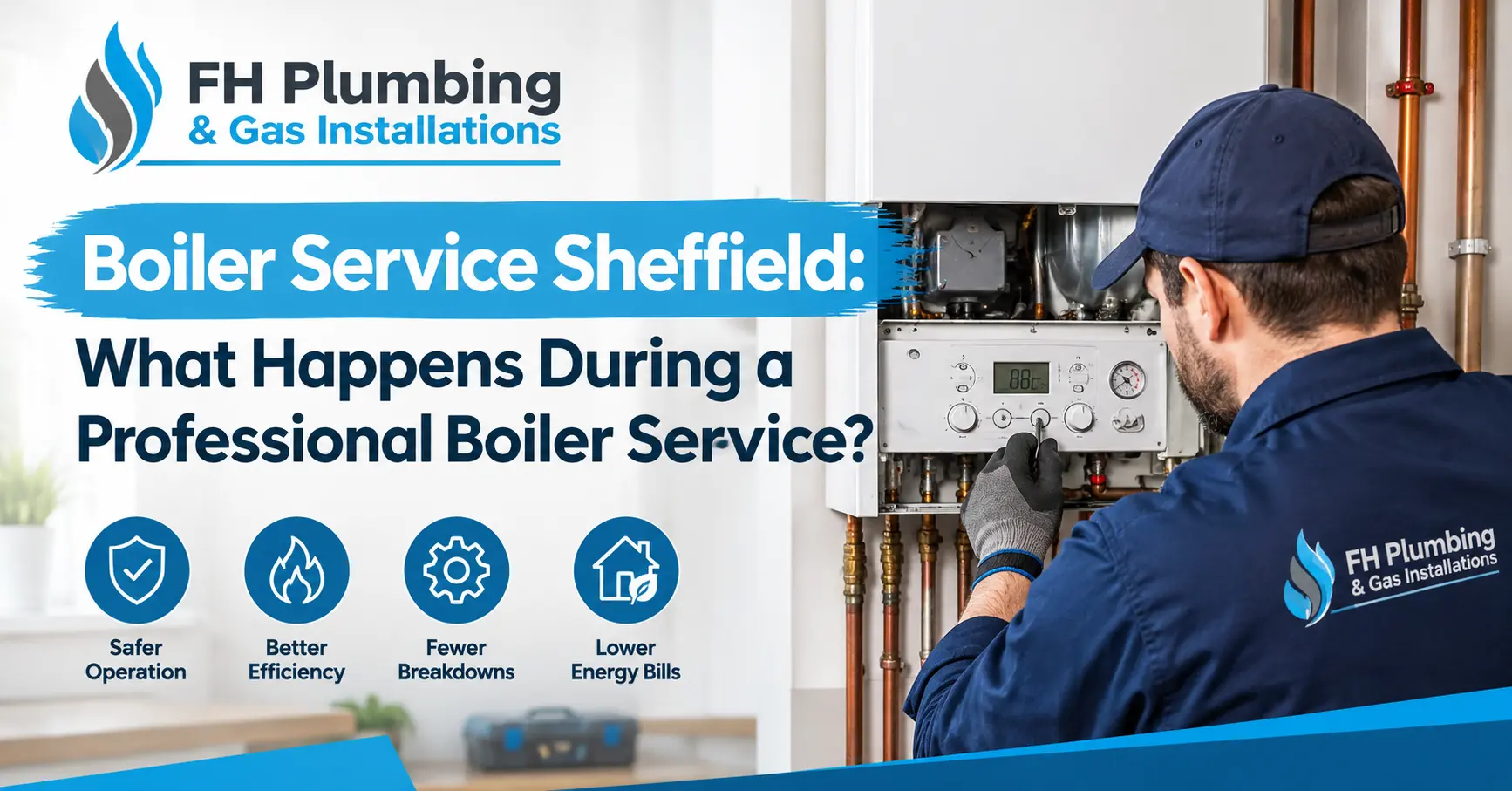
Boiler Service Sheffield: What Happens During a Professional Boiler Service?

A professional boiler service Sheffield visit is a complete health check for your heating system. A qualified engineer inspects, tests and cleans the key parts of your boiler so it runs safely, efficiently and reliably. For a standard gas boiler, the visit typically takes around 45 to 60 minutes, although older or more complex systems can take longer.

Many homeowners book a service without knowing what the engineer actually does once the door closes behind them. That uncertainty is understandable, because a boiler sits quietly in a cupboard or utility room until something goes wrong. This guide explains each stage of a service, what you should receive afterwards, and how to choose the right engineer. It is written by the team at FH Plumbing & Gas Installations, who work on heating systems across Sheffield every week.

What Is a Boiler Service and Why Does It Matter?

A boiler service is a planned inspection and maintenance visit in which an engineer checks that every safety and performance component works as the manufacturer intended. It is different from a repair, which fixes a known fault. A service aims to catch small problems early, before they turn into breakdowns or safety risks.

Regular boiler servicing Sheffield residents rely on brings three clear benefits:

  • Safety: Gas appliances can produce carbon monoxide if they burn fuel poorly, and a service helps to detect the warning signs.
  • Efficiency: A clean, correctly adjusted boiler uses fuel more effectively, which can help to keep running costs under control.
  • Reliability: Worn parts are spotted before they fail, which reduces the chance of a cold-weather breakdown.

Many manufacturers also expect an annual service to keep a warranty valid, so it is worth checking your paperwork.

Before the Visit: How the Engineer Begins

A good engineer does not open the boiler straight away. First, they ask about how the system has been behaving. Have you noticed strange noises, pressure drops, radiators that stay cold, or a pilot light that goes out? Your answers guide where they focus.

They will also confirm the boiler’s make, model and age, and look at previous service records if you have them. This background matters because different boilers have different known wear points.

What Is Included in a Boiler Service Sheffield Engineers Carry Out?

The exact checklist varies by manufacturer, but a thorough visit usually follows the steps below.

Visual Inspection of the Boiler and Flue

The engineer starts with the outside. They look for signs of leaks, corrosion, scorching or staining around the casing. They also check the flue, which is the pipe that carries waste gases outside, to confirm it is secure, unblocked and terminating safely.

Gas Pressure and Combustion Analysis

Next, the engineer checks that the gas supply to the appliance is working at the correct pressure. They then use a flue gas analyser, a handheld device that measures the gases leaving the boiler. This combustion analysis shows whether the fuel is burning cleanly. Poor readings can point to a dirty burner, a flue problem or an incorrect air-to-gas mix.

Internal Cleaning and Component Checks

With the casing removed, the engineer inspects the burner, heat exchanger, ignition system and fan. Dust, debris and limescale can collect on these parts and reduce performance. Where the manufacturer allows, the engineer cleans them. They also check seals and gaskets for wear.

On condensing boilers, they examine the condensate pipe, which carries acidic wastewater to a drain. A blocked or frozen condensate pipe is one of the most common reasons for a winter shutdown, so this check is especially valuable.

Pressure, Expansion Vessel and Controls

The engineer checks the system pressure and the expansion vessel, which absorbs the extra volume of water as it heats up. Incorrect pressure can cause lockouts, noisy operation or leaks. They also test the thermostat, programmer and any smart controls to confirm the boiler responds properly to your settings.

Safety Devices and Ventilation

Finally, the engineer tests the safety devices designed to shut the boiler down if something goes wrong. They check ventilation where it is required and confirm that a working carbon monoxide alarm is installed nearby. This stage is the main reason why gas boiler maintenance Sheffield households book each year should never be skipped.

What You Should Receive After the Service

When the work is finished, the engineer should talk you through what they found. You should expect:

  1. A clear explanation of the boiler’s condition in plain English.
  2. A written service report or completed service record.
  3. Honest advice on any worn parts, with no pressure to buy.
  4. A note of recommended actions and their urgency.

If a part needs replacing, a trustworthy engineer will explain why and give you a quote before starting work. For more serious faults, a dedicated boiler repair visit can be arranged separately.

How Often Should You Book an Annual Boiler Service Sheffield Homes Need?

Most manufacturers and heating professionals recommend servicing a gas boiler once every 12 months. An annual boiler service Sheffield households schedule early in autumn gives you time to fix any issue before the coldest weather arrives. A pre-winter boiler check is far less stressful than an emergency in January.

Landlords have an additional duty. Rental properties with gas appliances need a gas safety check each year, which is a separate legal requirement from a boiler service, although the two are often completed together. Landlords looking for a boiler service Sheffield tenants can rely on should ask the engineer whether the visit can include the landlord gas safety record.

How to Choose Local Boiler Service Engineers in Sheffield

Anyone working on gas appliances in the UK must be on the Gas Safe Register. Before letting anyone start work, ask to see their Gas Safe ID card and check that it covers the type of work being done. You can verify an engineer’s details on the official Gas Safe Register.

When comparing local boiler service engineers Sheffield residents can trust, consider the following:

  • Registration: Gas Safe boiler engineers Sheffield customers hire should show valid identification without hesitation.
  • Transparency: Look for a clear explanation of what the service includes and a written quote.
  • Local knowledge: An engineer who works regularly in Sheffield will understand the housing types, from older terraces to newer flats, and the boilers commonly fitted in them.
  • Aftercare: You should be able to contact the company if a problem appears after the visit.

FH Plumbing & Gas Installations offers boiler repair, boiler installation and wider plumbing solutions, so you can discuss servicing alongside any other heating concerns. Gas work should always be carried out by a registered engineer, and our gas engineers in Sheffield page explains more about the services available.

How to Prepare for Your Boiler Service

A little preparation helps your boiler service Sheffield appointment run smoothly:

  • Clear the area around the boiler so the engineer has room to work.
  • Make a note of any faults, noises or pressure drops you have noticed.
  • Find your previous service report and boiler manual if you have them.
  • Make sure someone aged 18 or over is at home.

Frequently Asked Questions

How long does a boiler service take?

A standard gas boiler service typically takes between 45 minutes and an hour. Older boilers, or ones with problems, may take longer.

How much does a boiler service Sheffield homeowners need cost?

The price depends on the boiler type, its condition and the provider. Ask for a clear written quote before booking so you know exactly what is included.

What happens if the engineer finds a fault during the service?

The engineer should explain the issue, how urgent it is and what the options are. Minor problems can often be fixed on the spot with the right parts. Serious safety faults may require the boiler to be switched off until it is repaired. If the boiler is old and keeps failing, you may want to discuss boiler replacement as a longer-term option.

Is a boiler service the same as a gas safety check?

No. A boiler service maintains the appliance, while a gas safety check is a legal inspection for landlords covering gas appliances and pipework. They are often done together but remain separate.

Can a boiler service prevent breakdowns?

It cannot remove every risk, but regular maintenance helps to find worn parts and dirty components before they cause failures. If your heating does fail in cold weather, an emergency plumber in Sheffield can help.

When is the best time of year to book a service?

Late summer or early autumn is ideal. Engineers are usually less busy than they are in the winter, and you have time to deal with any findings before the heating season starts.

Conclusion

Understanding what happens during a boiler service takes the mystery out of the process. The engineer inspects the boiler and flue, tests gas pressure, analyses combustion, cleans internal components, checks pressure and controls, and confirms that every safety device works. You then receive a clear report and honest advice.

If you are searching for a boiler service Sheffield residents can book with confidence, choose a registered engineer, ask what the visit includes and get a written quote. A yearly boiler service Sheffield properties benefit from can protect your family, reduce the chance of an unexpected breakdown and keep your system working efficiently through the colder months.

To arrange your visit, speak to FH Plumbing & Gas Installations on 07853 958388 or use the contact  to request a booking.
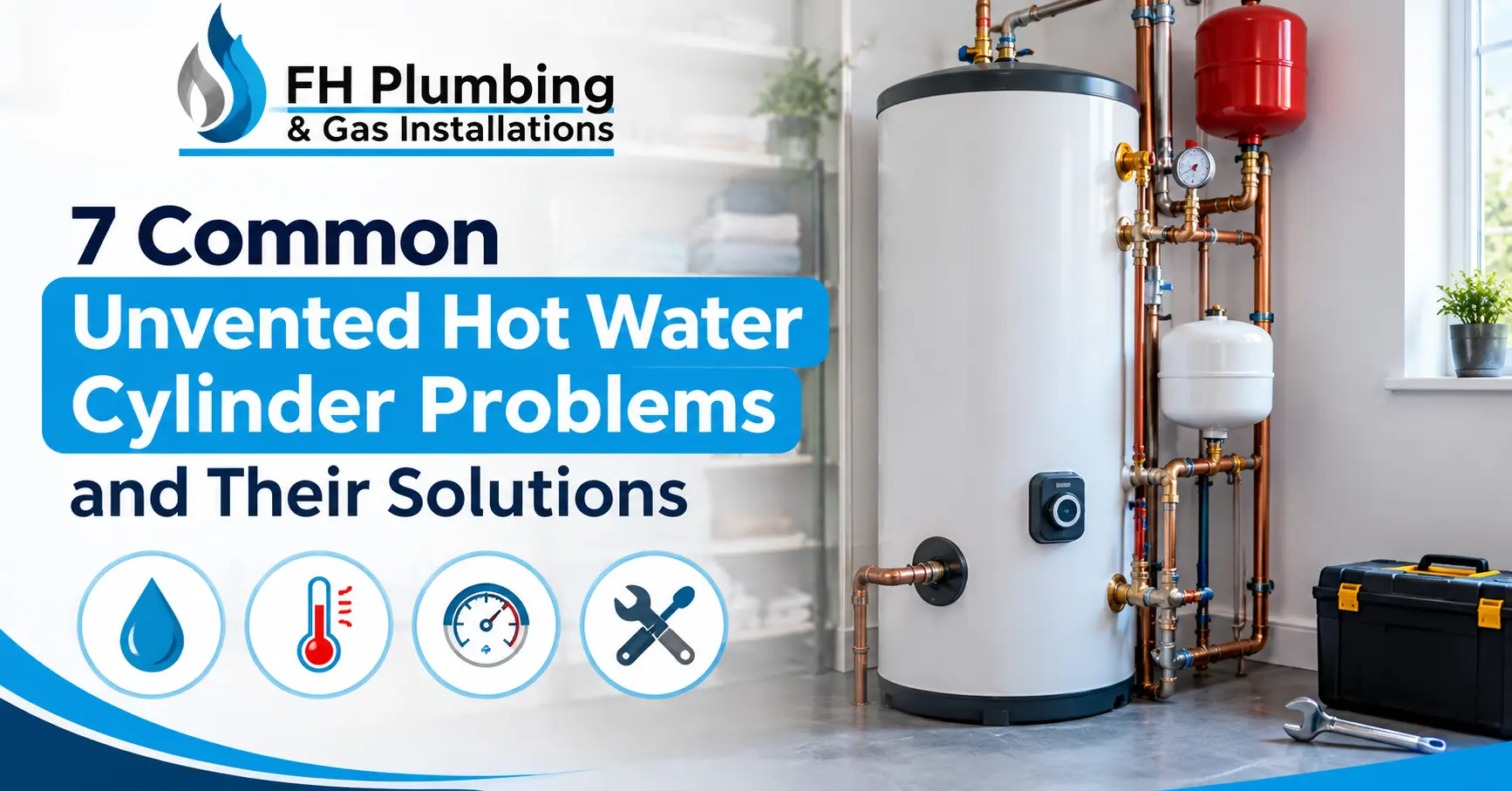
7 Common Unvented Cylinder Problems and Their Solutions

A pressurised hot water cylinder should deliver strong, steady hot water to every tap and shower in the house. When it stops doing that, you notice straight away. Most unvented cylinder problems come down to a handful of causes: no heat, falling pressure, a dripping discharge pipe, overheating, limescale, noise or weak flow at the taps.

This guide explains each fault in plain English, what is safe for you to check, and when to stop and call a qualified engineer. It is written for Sheffield homeowners, landlords and tenants who want clear answers rather than guesswork.

Quick answer: The most common faults are a failed immersion heater or thermostat, a worn expansion vessel, a faulty pressure relief valve, a blocked inlet strainer and limescale build-up. Heating and pressure faults are often fixable with a repair. Anything involving overheating, a hot or running discharge pipe, or the safety valves needs a professional straight away.

Why Safety Comes First With Pressurised Cylinders

An unvented cylinder stores hot water at mains pressure. That is why the shower is so good, and it is also why the safety devices matter. The cylinder is fitted with a temperature relief valve, an expansion relief valve and a tundish (the small visible funnel on the discharge pipe). These exist to release water safely if something goes wrong.

In England, installing and servicing these systems is controlled work under Part G3 of the Building Regulations, so it must be carried out by a suitably qualified person. Never block, cap, adjust or remove a safety valve or discharge pipe, however annoying the dripping may be. Manufacturers also recommend an annual service, and skipping it is the quickest way to turn a small fault into an expensive one.

Unvented Hot Water Cylinder Problems Sheffield Homeowners See Most

Sheffield sits in a hard water area, which means limescale is a regular feature of local cylinder faults. Alongside that, older cylinders that have never been serviced tend to show the same patterns. Here are the seven faults we would expect to come up most often, with the likely cause and the sensible next step for each.

1. Unvented Cylinder Not Heating Water

If the taps run cold or only lukewarm, start with the simple checks. Make sure the programmer or timer is calling for hot water, the cylinder thermostat is turned up, and the immersion heater switch (if you have one) is on. Check that your boiler is working, as the cylinder relies on it to heat the coil.

If those are fine, the usual culprits are:

  • A failed immersion heater element, which is common on older or limescaled cylinders
  • A faulty cylinder thermostat or energy cut-out, which stops the heating from switching on
  • A stuck motorised valve, so hot water from the boiler never reaches the coil
  • A tripped safety cut-out, which usually has a cause worth investigating

A tripped cut-out has a reset button on some models, but if it trips again after one reset, leave it alone and book an engineer. Replacing a thermostat or element is a routine repair for a competent engineer, usually completed in a single visit.

2. Unvented Cylinder Losing Pressure

If the taps are weaker than usual, or the pressure seems to come and go, the problem may lie with the cylinder rather than your supply. An unvented cylinder losing pressure often points to one of three things: a failing pressure reducing valve, a leaking joint or component, or a mains supply issue.

Check whether other cold taps in the house are also weak. If they are, the issue may be your incoming mains, and a call to your water company is a sensible first step. If only the hot water is affected, a damp patch around the cylinder, a drip from a valve or a falling reading on the pressure gauge (if fitted) suggests a fault on the cylinder side. A leak on a pressurised system should never be left to continue, so isolate the supply if you can do so safely and call an engineer.

3. Water Dripping From the Tundish

The tundish is where the cylinder shows you that something is releasing water. Occasional tiny drips can occur, but a steady drip or a heavy flow is not normal.

The most common cause is an expansion vessel that has lost its air charge. As the water heats and expands, it has nowhere to go, so the expansion relief valve opens and sends it down the discharge pipe. A worn pressure relief valve that no longer seats properly can cause the same symptom. Recharging or replacing the vessel, or replacing the valve, solves it in most cases. If the discharge pipe is running hot water, treat it as urgent and switch off the heat source (immersion switch and boiler’s hot water function) while you wait for help.

4. Water Too Hot or the Cylinder Overheating

Very hot water at the taps, steam from the discharge pipe or a cylinder that feels hotter than usual should never be ignored. A stuck thermostat or a failed cut-out can allow the water to keep heating past its set temperature, and a pressurised cylinder at excessive temperature is a genuine safety risk.

Switch off the immersion heater and the boiler’s hot water supply, keep people away from the tundish, and call a qualified engineer immediately. If there is a danger to anyone in the home, call the emergency services first. This is one fault where there is no safe DIY option, and if it happens out of hours, an emergency plumber in Sheffield is the right call.

5. Lukewarm Water or Hot Water Running Out Quickly

When a cylinder that used to last the whole family’s morning showers runs out in minutes, the cause is usually limescale. Scale coats the immersion element and coil, so heat transfers poorly and the cylinder heats more slowly while using more energy. In a hard water area this builds up faster than most people expect.

A failing thermostat can also stop the cylinder reaching full temperature, and a household that has grown or changed its habits may simply have outgrown the cylinder size. An engineer can descale or replace the element, test the thermostats and tell you honestly whether it is the cylinder or the demand that has changed.

6. Banging, Rumbling or Kettling Noises

Kettling, a rumbling sound like a kettle coming to the boil, usually means scale has built up on the heating surface and water is overheating in pockets. A sharp bang when a tap is turned off is a different issue called water hammer, caused by a sudden stop in flow.

Both are worth acting on. Scale reduces efficiency and shortens the life of the element, while repeated hammering can stress joints and fittings. Descaling, replacing worn parts or fitting a suitable arrestor are the usual fixes.

7. Weak Flow at Hot Taps

If the cold taps run well but the hot side trickles, a blocked inlet strainer or a clogged filter on the cylinder’s pressure reducing valve is a likely reason. Debris from the mains, particularly after nearby water works, collects in the strainer and restricts flow.

Cleaning the strainer is a quick job for an engineer and often restores full flow immediately. It is also a good reason to have the cylinder serviced regularly, since the strainer is checked as part of a proper service.

What Are Unvented Hot Water Cylinder Faults Telling You?

Most unvented hot water cylinder faults give warning signs before they become serious. A slightly longer wait for hot water, a damp patch, a small change in noise or a tundish that drips more than it used to are all early messages. Catching unvented cylinder problems early usually means a smaller repair and a lower bill.

Here is a simple way to decide what to do:

  • Safe to check yourself: timer settings, thermostat dial, immersion switch, whether other taps are affected
  • Call an engineer soon: weaker hot water only, slow heating, new noises, a damp patch
  • Call straight away: a hot or running discharge pipe, steam, overheating or any leak you cannot isolate

When to Call a Professional for Cylinder Repairs

Because pressurised cylinders are regulated and potentially dangerous, repairs are not a place for experiments. A qualified engineer will test the thermostats, check the expansion vessel charge, inspect the safety valves and tundish, clean the strainer and confirm the discharge pipe is installed correctly.

If you need Unvented Cylinder Repair Sheffield residents can rely on, FH Plumbing & Gas Installations can inspect the cylinder, explain what has failed and talk you through the repair or replacement options before any work starts. You can arrange a cylinder inspection at a time that suits you.

Should You Repair or Replace Your Cylinder?

Repair usually makes sense when the cylinder is in sound condition and the fault is a single component, such as a thermostat, element, valve or expansion vessel. Replacement becomes worth considering when the cylinder is leaking from the body, is heavily scaled or corroded, or keeps developing new faults. A new cylinder is often installed alongside other work, and if you are also thinking about a new boiler, boiler installation planned at the same time can save disruption. If the boiler itself is the weak link, a boiler repair may restore the whole system. FH Plumbing & Gas Installations can assess both the cylinder and the boiler and advise which option is better value for your home.

How to Prevent Problems With Your Cylinder

A few habits make a real difference when it comes to avoiding unvented cylinder problems:

  • Book an annual service so valves, vessel charge and thermostats are tested
  • Keep the area around the cylinder clear so leaks and drips are noticed quickly
  • Never cover or alter the tundish or discharge pipe
  • Act on small changes, such as noise or slower heating, rather than waiting for a breakdown
  • Keep the installation paperwork and service records somewhere safe

Frequently Asked Questions

What are the most common unvented cylinder problems?

The most common faults are a failed immersion heater or thermostat, a worn expansion vessel, a faulty pressure relief valve, a blocked inlet strainer and limescale build-up. Between them, these account for most no-heat, low-pressure and dripping complaints.

Why is my unvented cylinder not heating water?

Check the programmer, thermostat setting and immersion switch first. If they are correct, the likely causes are a failed element, a faulty thermostat, a stuck motorised valve or a tripped cut-out. An engineer can test each and repair the fault.

Why is my unvented cylinder losing pressure?

It could be a worn pressure reducing valve, a leak on the cylinder side, or a problem with the incoming mains. If only the hot taps are weak, the cylinder is the more likely cause. If every tap is weak, contact your water company.

Is it normal for the tundish to drip?

A small, occasional drip can happen, but a steady drip or a flow of water is not normal. It usually points to an expansion vessel that has lost its charge or a worn relief valve, and it should be checked.

Can I fix an unvented cylinder myself?

Simple checks such as timers and thermostat settings are fine. Work on the safety valves, expansion vessel, thermostats or discharge pipe must be done by a qualified person because the cylinder holds hot water under pressure.

How often should an unvented cylinder be serviced?

Manufacturers generally recommend an annual service. This keeps the safety devices working, reduces limescale-related faults and helps you spot wear before it causes a breakdown.

Conclusion

Most of these faults are fixable, and most give you a warning first. A cylinder that heats slowly, drips from the tundish, makes new noises or loses pressure is asking for attention, and acting early keeps repairs simple. The one rule to remember is that anything involving overheating, steam or a hot discharge pipe is a stop-and-call situation.

If you recognise any of the unvented cylinder problems described above, FH Plumbing & Gas Installations can diagnose the fault, explain your options clearly and get your hot water back to normal. Get in touch today to book an inspection, whether you need a repair, a service or advice on whether it is time for a new cylinder.

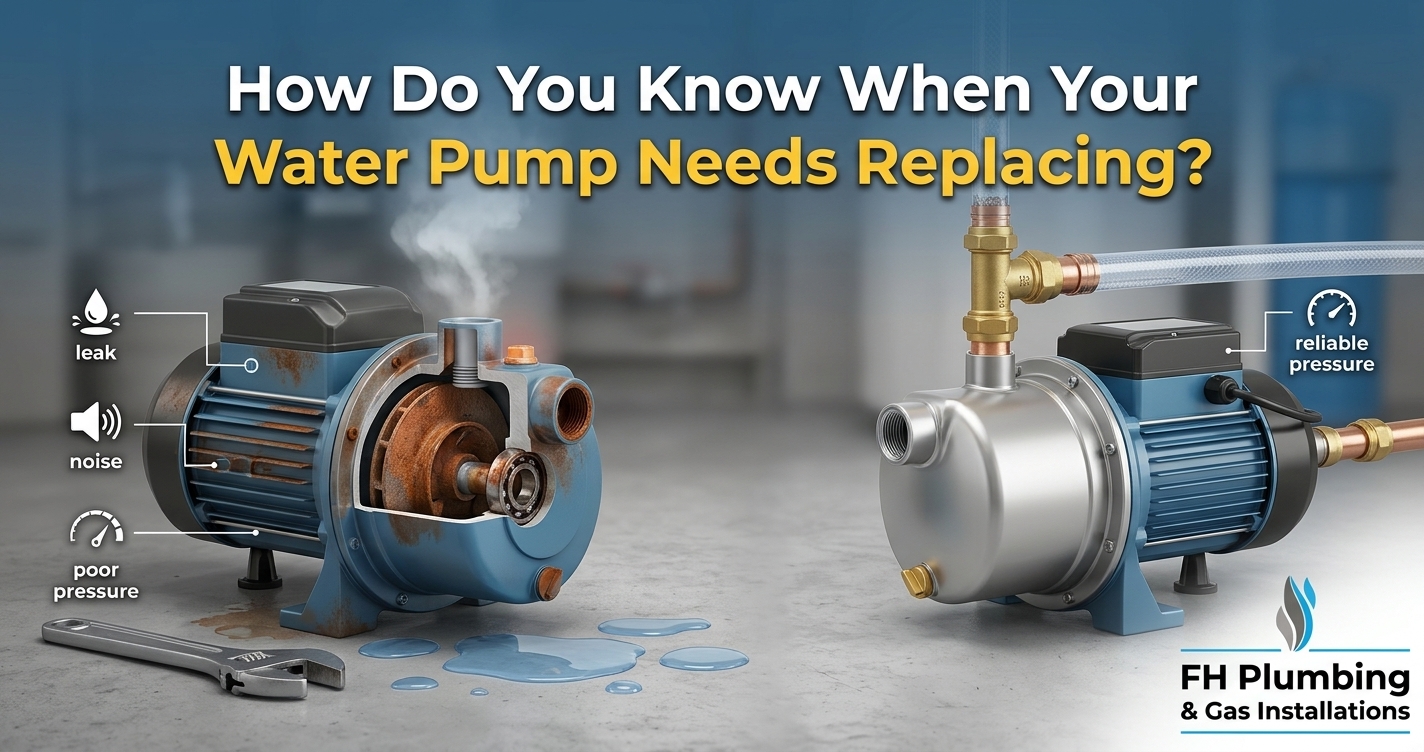
How Do You Know When Your Water Pump Needs Replacing?

A weak shower, a pump that never seems to switch off, or an odd grinding noise from the airing cupboard can all point to the same problem: a water pump that is reaching the end of its life. If you are searching for Water Pump Replacement Sheffield, this guide explains the warning signs, the likely causes and what to expect from a professional visit. It has been put together by the team at FH Plumbing & Gas Installations, a Gas Safe registered business that works on Sheffield homes every week.

Quick answer: You can usually tell your water pump needs replacing when pressure drops, the pump runs non-stop or switches on and off rapidly, it makes grinding or whining sounds, it leaks, or your energy bills rise without explanation. If the pump is old and keeps developing faults, replacement is normally better value than another repair.

What Does a Domestic Water Pump Do?

A domestic water pump boosts the pressure and flow of your water supply so that showers, taps and appliances work properly. In many Sheffield properties, particularly homes on higher ground or houses with tank-fed systems, the pump is what separates a gentle trickle from a strong, steady flow.

Because the pump works every time you use water, it wears over time. Knowing the signs of failure helps you act before a small fault turns into a cold shower or a flooded cupboard.

7 Warning Signs Your Water Pump Needs Replacing

1. Falling or Inconsistent Water Pressure

If your shower runs hot, then cool, then weak, the pump may no longer be delivering a consistent flow. Pressure that fades gradually over several weeks is a typical sign of internal wear, such as a worn impeller or a clogged inlet. If cleaning the filters and bleeding trapped air makes no difference, the lasting fix is usually water pressure pump replacement Sheffield specialists can complete in a single visit.

2. The Pump Runs Constantly or Switches On and Off Rapidly

A healthy pump starts when water is demanded and stops once the demand ends. A unit that never stops may be struggling to build pressure because of an internal fault or a leak elsewhere in the system. Rapid cycling, often called short cycling, can point to a failing pressure switch or a damaged pressure vessel. Both put extra strain on the motor and shorten its life.

3. Grinding, Whining or Rattling Noises

A pump should hum quietly in the background. Grinding often suggests worn bearings, while a high-pitched whine can mean the motor is overworking. Rattling may indicate debris or a loose impeller. Persistent noise rarely clears up on its own.

4. Leaks, Rust and Corrosion

Damp patches, drips around the seals or visible rust on the casing all mean the housing or seals are deteriorating. Even a slow drip can damage cupboards, ceilings and nearby electrics, so it should never be ignored.

5. The Pump Fails to Start or Cuts Out Intermittently

If the pump works one day and stays silent the next, the motor windings, capacitor or control board could be failing. Resetting the unit once is reasonable, but repeated cut-outs usually signal a pump nearing retirement.

6. Air, Sputtering or Discoloured Water

Sputtering taps suggest air is entering the system or the pump is losing its prime. Brown or cloudy water may point to corrosion inside the pump or pipework. Neither is something you should simply live with.

7. Rising Energy Bills

A worn pump has to work harder to move the same amount of water, which draws more electricity. If your bills have crept up and nothing else in the house has changed, an inefficient pump could be one reason.

Repair or Replace? How to Decide

Not every fault means a brand-new pump. Water pump repair Sheffield technicians carry out is often sensible when the problem is a simple part, such as a pressure switch, a seal or a blocked filter, and the unit is relatively young.

Replacement usually makes more sense when:

  • the pump is more than ten years old
  • you have already paid for repeated repairs
  • the motor or housing is corroded or damaged
  • the repair cost is close to half the price of a new unit
  • replacement parts are no longer available

In these situations, Water Pump Replacement Sheffield is generally the more economical choice, because a new unit brings a fresh warranty, quieter running and better efficiency. A trustworthy engineer will explain both options honestly and let you decide.

What Causes a Water Pump to Fail?

Understanding the cause helps prevent a repeat problem. The most common culprits include:

  • Age and general wear: bearings, seals and impellers all wear with use.
  • Limescale and sediment: deposits restrict flow and strain the motor.
  • Running dry: a pump without water can overheat within minutes.
  • Electrical faults: power surges or damaged wiring can burn out the motor.
  • Incorrect sizing or poor installation: a pump that is too small or badly fitted wears out far faster.

An annual check by a qualified engineer can spot early problems and extend the life of your pump.

What Happens During Water Pump Installation in Sheffield?

A professional water pump installation Sheffield customers can trust follows a clear process, so there are no surprises on the day:

  1. Assessment: the engineer tests pressure and flow, checks the existing pipework and confirms the right pump size for your property.
  2. Isolation: the water and power supplies to the old pump are safely turned off and the system is drained where needed.
  3. Removal: the faulty pump is disconnected and taken away.
  4. Fitting: the new pump is mounted with the correct valves, anti-vibration fixings and pipework.
  5. Electrical connection: the pump is wired in line with current regulations.
  6. Testing: the system is flushed, primed and checked for leaks, noise and consistent pressure.
  7. Handover: you receive clear advice on how to use and maintain the new pump.

When a Failing Pump Becomes an Emergency

Some faults cannot wait. Call for help straight away if you have no water at all, a pump leaking heavily near electrics, a burning smell from the motor, or a tripped fuse every time the pump starts. If it is safe to do so, switch off the pump at its isolator and close the stopcock to limit damage.

Quick emergency water pump repairs Sheffield residents can book will prevent water damage and restore your supply, and if the motor has burnt out, same-day Water Pump Replacement Sheffield may be the only safe solution. For urgent faults, contact emergency plumbers in Sheffield who can attend day or night.

Why Sheffield Homeowners Choose FH Plumbing & Gas Installations

When a pump fails, you want honest advice, clear pricing and tidy workmanship. The team is local and Gas Safe registered, diagnoses the fault first and recommends replacement only when it genuinely makes sense. Whether you need a straightforward domestic water pump replacement Sheffield property owners can rely on, or a full system check, the engineers explain every step in plain English.

If your pump is part of a wider plumbing problem, the team also works as trusted local plumbers in Sheffield, so one visit can often cover everything.

Frequently Asked Questions

How long does a water pump last?

Most domestic pumps last roughly 8 to 15 years, depending on the model, water quality and how often it runs. Regular servicing helps it reach the upper end of that range.

How much does a water pump replacement cost?

The price depends on the pump type, size and the complexity of your system. For an accurate figure for Water Pump Replacement Sheffield, an engineer needs to inspect the existing unit and pipework first, then provide a clear quote.

Can I replace a water pump myself?

It is not recommended. A pump involves both plumbing and electrics, and a poor installation can cause leaks, shorten the pump’s life or invalidate the warranty.

Is low pressure always caused by the pump?

No. Blocked filters, a partly closed stopcock, hidden leaks or problems with the mains supply can all reduce pressure. A proper diagnosis finds the real cause before any parts are replaced.

Conclusion

Weak pressure, constant running, strange noises, leaks and rising bills are the clearest signs that your water pump is failing. Acting early saves money, protects your home from water damage and keeps showers and taps performing as they should. When repair no longer makes sense, Water Pump Replacement Sheffield from the experienced team at FH Plumbing & Gas Installations gets your supply back to full strength quickly and safely. To arrange a pump inspection, get in touch today.

Contact Details

Phone: 07853 958388
Email: info@fhplumbing.co.uk
Address: 55 Badger Rise, Woodhouse, Sheffield

7 Warning Signs Your Boiler Needs Repair Before Winter

Sheffield winters arrive quickly, and the first cold snap is rarely the moment you want to discover that your heating has given up. Learning to spot boiler warning signs early gives you time to arrange a repair on your own terms, rather than scrambling for help when the temperature drops and the whole household is waiting for heat.

At FH Plumbing & Gas Installations, we see the same pattern every autumn: small, easily fixed faults that were ignored over summer turn into full breakdowns once the boiler works hard again. In this guide, we explain seven common signs your boiler needs repair, what each one usually means, what you can safely check, and when to call a Gas Safe registered engineer.

Quick Answer: What Are the Main Warning Signs of a Boiler Problem?

The boiler warning signs we see most often are strange noises, falling pressure, water leaking from the boiler, the boiler switching itself off, radiators that stay cold or lukewarm, fault codes on the display, and rising energy bills with weaker performance. If you notice any of these, stop using the boiler if there is a leak or a smell of gas, and book a qualified engineer to inspect it.

Why Boiler Problems Show Up in Autumn

Over the warmer months, many boilers sit idle for weeks. Seals dry out, valves stick and sludge settles in pipework. When the heating comes back on in October, those hidden weaknesses are exposed. Understanding common boiler problems before winter starts means you can act early, avoid the busiest emergency periods and keep repair costs under control.

The 7 Boiler Faults to Watch For

1. Boiler Making Strange Noises

A healthy boiler hums quietly. If you hear banging, whistling, gurgling or clanking, something is wrong. These noises often point to limescale, trapped air, low water pressure or a failing pump. Sheffield sits in a moderately hard water area, so scale building up on the heat exchanger is a frequent culprit. A boiler making strange noises should be checked promptly, because the underlying cause usually gets worse rather than better.

2. Boiler Losing Pressure

Most sealed systems should sit between 1 and 1.5 bar when the heating is off. If you are topping up the pressure every few days, you have a boiler losing pressure for a reason. The cause might be a small leak on a radiator valve, a faulty pressure relief valve or a failing expansion vessel. Topping up repeatedly without finding the cause only hides the problem and introduces fresh oxygen, which speeds up corrosion.

3. Boiler Leaking Water

Any water around or beneath the boiler is a clear sign of trouble. A boiler leaking water could be caused by a worn seal, a corroded pipe or a damaged internal component. Switch the boiler off, avoid touching electrical parts, and arrange a repair visit as soon as possible. Small drips often become major leaks, so do not wait for the problem to grow.

4. Boiler Keeps Switching Off

If your boiler keeps switching off, it is usually protecting itself. Common reasons include low pressure, a blocked condensate pipe, a faulty thermostat or a circulation problem caused by sludge. A condensate pipe that freezes in cold weather is a particularly common winter fault in Yorkshire homes. Do not keep resetting the boiler over and over, as repeated resets can mask a genuine safety issue.

5. Boiler Not Heating Properly

Cold radiators, radiators that are hot at the top but cold at the bottom, or a house that takes far longer to warm up are classic boiler warning signs. In many cases the cause is magnetic sludge, a failing pump or a stuck diverter valve. If your boiler is not heating properly, bleeding the radiators is a sensible first step, but persistent cold spots usually need a professional power flush or a component repair.

6. Boiler Error Codes

Modern boilers display fault codes to help engineers diagnose issues quickly. Boiler error codes vary between manufacturers, so check your manual, note the code down and mention it when you contact an engineer. A one-off code that clears after a single reset may not be serious, but repeated codes are a reliable sign of a developing fault.

7. Rising Bills and Boiler Performance Problems

If your energy bills climb without any change in how you use heating, boiler performance problems may be to blame. A boiler that burns less efficiently uses more gas to produce the same heat. Another important sign of a faulty boiler is a lazy yellow or orange flame on a gas boiler, which should normally burn blue. This can indicate incomplete combustion, so contact a Gas Safe registered engineer straight away and make sure you have a working carbon monoxide alarm installed.

Early Warning Signs of Boiler Failure You Might Overlook

Not every fault is loud or dramatic. Some early warning signs of boiler failure are subtle, such as a pilot light that keeps going out, a slow delay before hot water arrives, a musty smell near the boiler, or visible rust and staining around the casing. These are all signs of a faulty boiler, and paying attention to small changes helps you catch problems before they cause a complete breakdown.

What You Can Safely Check Yourself

There are a few simple checks that are safe for any homeowner:

  1. Look at the pressure gauge. If it has dropped below 1 bar, follow your manufacturer’s instructions to repressurise.
  2. Check the display. Write down any fault code before you reset anything.
  3. Review your thermostat and timer. Make sure the settings have not changed after a power cut.
  4. Check for visible leaks or damp patches. Note where they are for your engineer.
  5. Bleed cold radiators. Release trapped air if the tops feel cooler than the bottoms.

Never remove the boiler casing or attempt gas or internal repairs yourself. These jobs must be carried out by a Gas Safe registered engineer. If you ever smell gas, turn off the supply at the meter, open windows, avoid flames and switches, and call the National Gas Emergency line on 0800 111 999.

When Should You Call a Professional?

Call an engineer without delay if you notice a gas smell, a yellow flame, water leaking from the boiler, repeated fault codes, or a complete loss of heating and hot water. If your home is without heat in freezing weather, our emergency boiler repair Sheffield service can help restore warmth quickly. For less urgent faults, booking boiler repair Sheffield appointments in October is far easier than waiting until December, when demand is at its highest.

Boiler Maintenance Sheffield Homes Need: The Best Way to Avoid Surprises

Regular servicing is the most effective way to prevent breakdowns. An annual service allows an engineer to clean key components, test safety devices, check pressure and flue operation, and spot worn parts before they fail. Many of the boiler warning signs listed above can be caught during a routine visit, which is why boiler maintenance in Sheffield matters so much before the cold sets in.

At FH Plumbing & Gas Installations, our engineers explain each finding in plain English, so you understand what needs attention now and what can wait.

Repair or Replace: When to Replace an Old Boiler

Most faults are repairable, and a repair is often far cheaper than a new boiler. However, it may be time to think about replacement when:

  • Your boiler is more than 12 to 15 years old
  • Repairs are becoming frequent or expensive
  • Spare parts are hard to find
  • Efficiency has dropped noticeably
  • The heat exchanger is badly corroded

A new, high-efficiency model can reduce running costs and give you peace of mind. If you are weighing your options, our team can advise honestly on whether a repair or a boiler installation makes more sense for your home and budget.

Frequently Asked Questions

What are the most common boiler warning signs?

The most common signs are strange noises, pressure loss, leaks, the boiler switching off by itself, poor heating, fault codes and rising bills. Any of these deserves a professional inspection.

Is it safe to keep using a boiler with a problem?

It depends on the fault. If there is a gas smell, a yellow flame, a significant leak or any carbon monoxide alarm warning, stop using the boiler immediately and call a Gas Safe registered engineer. For minor issues, use it cautiously until it can be inspected.

Why does my boiler keep losing pressure?

Pressure usually falls because of a leak, a faulty pressure relief valve or a failing expansion vessel. Repeated top-ups without a repair can lead to further damage.

How often should a boiler be serviced?

Most manufacturers recommend a service once a year. Regular checks help maintain efficiency, protect your warranty and catch faults early.

When is the best time to book a boiler repair?

The best time is as soon as you notice a problem. Booking before winter helps you avoid the busiest period and reduces the risk of losing heating during cold weather.

Conclusion: Act Early and Stay Warm This Winter

Spotting boiler warning signs early can save you money, stress and a cold house. Noises, pressure loss, leaks, repeated shutdowns, poor heating, error codes and rising bills are all messages from your boiler, and they are far easier to deal with in autumn than in the middle of a freeze.

If you recognise any of these signs, FH Plumbing & Gas Installations is ready to help with honest advice and dependable Gas Safe registered support across Sheffield. Get in touch through our contact to book an inspection before winter arrives.

No Hot Water But Heating Works: Causes and Solutions

Waking up to a warm house but a freezing shower is one of the most frustrating boiler faults a homeowner can face. If you have no hot water but heating works, the good news is that your boiler is still firing, which usually points to a fault in one specific part of the system rather than a complete breakdown. In this guide, we explain the most common causes, the safe checks you can carry out yourself, and when it is time to call a Gas Safe registered engineer.

At FH Plumbing & Gas Installations, we regularly attend homes across Sheffield where the radiators are toasty but the taps run cold. The causes are usually straightforward to diagnose, and most can be fixed in a single visit.

Quick Answer: Why Is There Hot Heating but No Hot Water?

When a home has no hot water but heating works, the most common causes are a faulty diverter valve, a failed motorised valve, a stuck or broken thermostat, low boiler pressure, a scaled-up heat exchanger, or a problem with the hot water cylinder or its programmer settings. Homeowners often describe the same fault as no hot water but radiators are working, or simply heating works but no hot water. Because heating and hot water share one boiler but use different components to deliver heat, one can fail while the other carries on as normal.

Why Does Your Home Have No Hot Water But Heating Works?

Your boiler produces heat in the same way for both radiators and taps. The difference lies in where that heat is sent. Inside the system, valves and controls decide whether hot water goes to your radiators, to a cylinder, or directly to your taps. When one of those parts fails, you end up with a central heating working but hot water not working situation.

Understanding which type of boiler you own is the first step towards finding the fault.

Combi Boilers

A combi boiler heats water on demand. When you open a hot tap, the boiler switches from heating mode to hot water mode. If you have hot water not working on combi boiler models, the diverter valve is often the culprit, and it is the first part we check when a customer reports no hot water but heating works. This small valve redirects heat between the radiators and the taps, and when it sticks, the boiler keeps sending heat to the radiators only.

System and Regular Boilers

With a system or regular boiler, hot water is stored in a cylinder. If your boiler heating but no hot water is the problem here, the cause is often a stuck motorised (zone) valve, a failed cylinder thermostat, or a programmer that is not calling for hot water.

Common Causes of Hot Water Failure When the Heating Is Fine

1. Faulty Diverter Valve

On combi boilers, the diverter valve is one of the most frequent reasons for a boiler hot water problem. Signs include radiators heating up when you run a hot tap, or taps that only produce lukewarm water. Over time, limescale and debris can cause the valve to stick or its internal components to wear out.

2. Failed Motorised Valve

On system and regular setups, a two-port or three-port motorised valve directs hot water to the cylinder. If it jams, the cylinder never receives heat. You may notice the boiler firing for the radiators while the cylinder stays cold.

3. Thermostat or Programmer Problems

A cylinder thermostat that has failed, or a programmer set to heating only, can leave you with no hot water in house but heating is on, and a boiler not producing hot water even though it fires normally. It is worth checking your timer settings first, especially after a power cut or the clocks changing.

4. Limescale in the Heat Exchanger

Sheffield sits in a moderately hard water area, so scale can build up inside a combi boiler’s plate heat exchanger. The result is a boiler not heating water properly, with water that comes out lukewarm or fluctuates between hot and cold.

5. Low Boiler Pressure

If your boiler pressure drops below roughly 1 bar, some combi models prioritise safety and restrict hot water output. A gauge reading outside the normal range is a clear warning sign.

6. Airlocks or Blockages in Pipework

Trapped air or debris can stop hot water reaching the tap. If you notice no hot water from taps but heating works, and only one tap is affected, a localised blockage or tap fault may be to blame.

7. Cylinder or Immersion Heater Faults

If your home has a hot water cylinder, the immersion heater or thermostat could have failed. A cylinder that is fully cold while the boiler runs normally strongly suggests a control or valve fault.

Safe Checks You Can Do Before Calling an Engineer

Before you book a visit, there are a few simple steps worth trying. These are safe for any homeowner and can sometimes solve the problem without a call-out.

  1. Check the boiler display. Look for fault codes, and note them down for your engineer.
  2. Check the pressure gauge. If it is below 1 bar, your boiler manual will explain how to repressurise it safely.
  3. Review your programmer. Make sure hot water is switched on and scheduled correctly.
  4. Turn the hot water temperature up. Some combi boilers have a separate dial for domestic hot water.
  5. Run the hot tap for a minute. This can clear small airlocks and prompt the boiler to switch modes.
  6. Reset the boiler once. Follow the manufacturer’s instructions, and do not repeat the reset more than once.

If you still have no hot water but heating works after these checks, the fault is almost certainly a component that needs professional attention.

What Not to Do

Never remove the boiler casing, tamper with gas connections, or attempt to replace internal valves yourself. Gas appliances must be repaired by a Gas Safe registered engineer. If you smell gas, turn off the supply at the meter, open windows, avoid switches and flames, and call the National Gas Emergency line on 0800 111 999 straight away.

How a Professional Engineer Diagnoses the Problem

When you report no hot water but heating works, an experienced engineer follows a methodical process. They will check the pressure and fault codes, test the diverter or motorised valve, inspect the thermostat, measure flow rates at the tap, and assess whether limescale has restricted the heat exchanger. This structured approach avoids guesswork, which saves you money and prevents repeat visits.

At FH Plumbing & Gas Installations, our engineers explain what they find in plain English before any work begins, so you understand the fault, the repair options, and the cost involved. If your fault needs urgent attention, our emergency boiler repair service is available to help restore comfort quickly.

Repair or Replace: What Makes Sense?

Most cases of no hot water but heating works are repairable. A diverter valve replacement, a new motorised valve, or a thermostat swap is generally far more affordable than a new boiler. However, replacement may be worth considering if:

  • Your boiler is more than 12 to 15 years old
  • Repairs have become frequent or costly
  • Spare parts are no longer available
  • The heat exchanger is badly corroded or scaled

If you are weighing up your options, our team can advise honestly on whether a repair or a boiler installation is the better long-term investment for your home.

How to Prevent Hot Water Problems in the Future

Regular care keeps your system reliable throughout the year, especially through the colder months when demand is highest.

  • Book an annual boiler service. It is the single best way to catch worn valves and scale early.
  • Consider a magnetic filter or system flush. This removes sludge that can damage valves and heat exchangers.
  • Keep an eye on pressure. Top it up when needed and report repeated pressure loss.
  • Use a scale inhibitor in hard water areas. It helps protect combi heat exchangers.
  • Act on early warning signs. Lukewarm water, strange noises, or delayed hot water often appear before a full failure.

For wider pipework or tap-related concerns, our plumbing solutions cover everything from leaks to full system upgrades.

Frequently Asked Questions

Why do I have no hot water but heating works?

The usual causes are a faulty diverter valve, a stuck motorised valve, a failed thermostat, or limescale in the heat exchanger. Heating and hot water use different components, so one can fail while the other continues to work.

Is it safe to use my heating if the hot water has stopped working?

In most cases, yes, provided the boiler is not showing a safety fault, leaking, or producing unusual smells or noises. However, you should arrange an inspection promptly, because a stuck valve can worsen over time.

How much does it cost to fix a boiler that is not producing hot water?

Costs depend on the part and the make of the boiler. A diverter valve, motorised valve, or thermostat replacement are all common repairs, and a qualified engineer can give you a clear quote once the fault is confirmed.

Can low boiler pressure cause the boiler to stop heating water?

Yes. If pressure falls too low, many combi boilers restrict hot water output as a protective measure. Repressurising it safely can restore normal operation, but repeated drops suggest a leak that needs investigating.

How long does it take to fix a hot water fault?

Many faults can be diagnosed and repaired during a single visit if the engineer has the right part. More complex issues, such as a corroded heat exchanger, may take longer.

When should I call a professional?

Call an engineer if basic checks do not restore hot water, if the boiler shows repeated fault codes, or if your hot water stopped working suddenly with no obvious cause.

Conclusion: Get Your Hot Water Back Quickly

Having no hot water but heating works is stressful, but it is rarely a sign that your whole boiler has failed. A faulty diverter valve, a stuck motorised valve, a thermostat issue, or limescale is usually behind it, and each of these is fixable by a qualified professional. Start with the simple checks above, and never attempt internal gas repairs yourself.

If the problem persists, FH Plumbing & Gas Installations is ready to help with fast, honest, Gas Safe registered support. Get in touch through our contact or explore our emergency plumber near me service when you need help urgently.

Do You Need Plumbers? Call Us at 07853 958388

Call Now
Get A Quote