24 HOUR CALL OUTS | NO CALL OUT FEE
Tel: 07853 958388
24 HOUR CALL OUTS | NO CALL OUT FEE

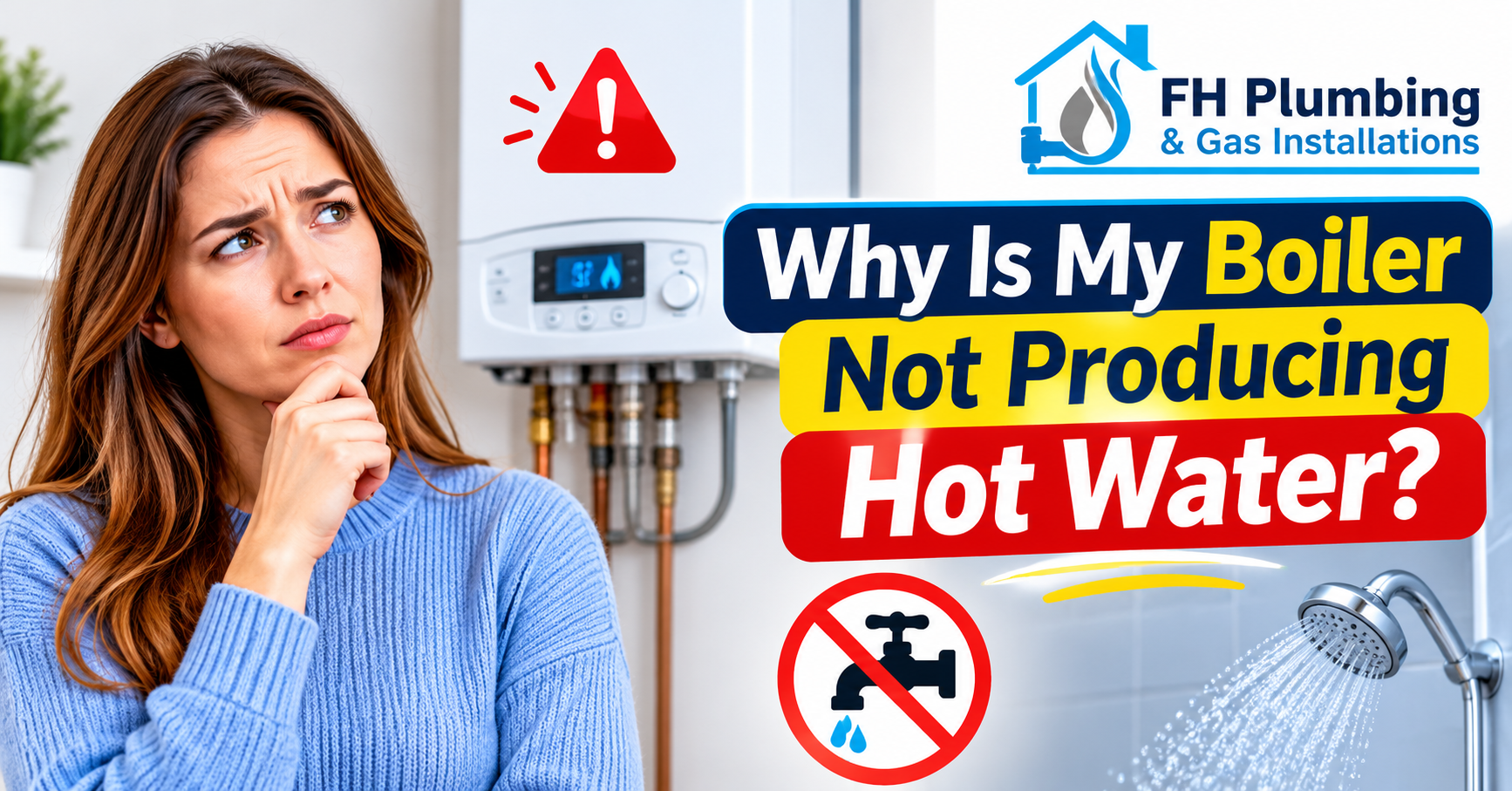
Why Is Your Boiler Not Producing Hot Water? Causes, Checks and Fixes

Few things disrupt a cold Sheffield morning like stepping into a shower that never warms up. If you have a boiler not producing hot water, the cause is often simpler than you might expect, although some faults do need a qualified professional. At FH Plumbing & Gas Installations, we regularly help homeowners, tenants and landlords work out why their hot water has stopped, and this guide shares the practical knowledge we have built up from that work.

You will learn how your boiler heats water, the most common faults, which safe checks you can try yourself, and when it is time to call a Gas Safe registered engineer.

What Causes a Boiler Not Producing Hot Water?

The most common causes are low boiler pressure, a faulty diverter valve, a failed thermostat, a frozen condensate pipe, limescale build-up, or a fault with the hot water cylinder in a system boiler setup. Some of these are simple to rule out, while others involve gas appliances and must only be handled by a qualified engineer.

How Your Boiler Heats Your Water

Understanding the basics makes fault-finding far easier. Most Sheffield homes use one of three setups:

  • Combi boilers heat water on demand. When you open a tap, a plate heat exchanger warms the incoming mains water almost instantly.
  • System boilers heat water and store it in a separate hot water cylinder.
  • Regular (conventional) boilers work with a cylinder and a cold water tank, usually in the loft.

Because each setup works differently, the symptoms differ too. A combi boiler that stops producing hot water often has a different fault from a system boiler with a cylinder that stays cold.

Common Reasons for a Boiler Not Producing Hot Water

Low Boiler Pressure

Your boiler needs a certain water pressure to operate safely. If the pressure gauge reads below the recommended range, the boiler may lock out or limit hot water output. Pressure can drop after bleeding radiators or because of a small leak somewhere in the system.

A Faulty Diverter Valve

In a combi boiler, the diverter valve directs heat either to your radiators or to your taps. When it sticks or wears out, you might find the heating works perfectly while the taps run cold, or the other way round. This is one of the most frequent reasons for no hot water but heating still working.

Broken Thermostat or Temperature Settings

A faulty cylinder thermostat, or a boiler temperature set too low, can stop water reaching a comfortable temperature. Settings sometimes change after a power cut or a programmer reset, so they are worth reviewing.

Limescale on the Plate Heat Exchanger

Over time, mineral deposits can restrict flow through the plate heat exchanger. The result is lukewarm water or a slow rise in temperature, particularly when a tap is opened for a short time.

A Frozen Condensate Pipe

During a hard Sheffield winter, the plastic condensate pipe outside your home can freeze. When that happens, many modern condensing boilers shut down as a safety measure. You may see an error code or notice that the boiler has stopped altogether.

Pump, Ignition or Gas Supply Problems

A failing pump, an ignition fault or an interrupted gas supply can all leave you without hot water. These problems involve gas and electrical components, so they are for a qualified engineer only.

Cylinder or Immersion Heater Faults

If you have a hot water cylinder, a failed motorised valve or a tripped immersion heater could explain why the water stays cold even though the boiler fires up.

Safe Checks Before You Call an Engineer

If you spot a boiler not producing hot water, these quick checks are safe for most households and may save you a call-out:

  1. Check the display. Look for an error code and note it down. Your manual explains what it means.
  2. Review the pressure gauge. Most boilers should sit within the range shown in the manufacturer’s instructions.
  3. Confirm the thermostat and timer settings. Make sure hot water is switched on and the programmer is set correctly.
  4. Check other gas appliances. If your hob also seems to be off, there may be a wider supply issue.
  5. Look at the condensate pipe in freezing weather. If it is frozen, pouring warm (not boiling) water over it can sometimes help. Take care on icy ground.
  6. Try a single reset. If your boiler has a reset button, follow the manufacturer’s guidance and press it once only.

If none of these steps restores your hot water, stop there. Repeated resets or opening the boiler casing can make matters worse and may be unsafe.

Warning Signs That Need Urgent Attention

Some symptoms should never be ignored. If you notice any of the following, switch off the appliance and contact a Gas Safe registered engineer straight away:

  • A smell of gas (call the National Gas Emergency Service on 0800 111 999)
  • Yellow or orange flames instead of a steady blue flame
  • Black marks or soot around the boiler
  • Strange banging, whistling or gurgling noises
  • Visible leaks or water pooling beneath the unit
  • A carbon monoxide alarm sounding

Carbon monoxide is odourless and dangerous, so fitting a working alarm near your boiler is strongly recommended. If your alarm sounds, open windows, leave the property and seek emergency help.

Why DIY Gas Repairs Are Not Worth the Risk

It can be tempting to open the casing and investigate, but working on a gas appliance without the right qualifications is illegal as well as unsafe. A trained engineer uses calibrated equipment to test pressures, combustion and flow, and can spot issues that are invisible to the eye. A professional diagnosis also protects your warranty and keeps your home insurance valid.

What Happens During a Professional Repair Visit

When you book with FH Plumbing & Gas Installations, our engineer starts by listening to what you have noticed, including when the problem began and whether it affects the heating, the taps or both. We then carry out a methodical inspection, which typically covers pressure, the diverter valve, thermostats, flow rates and safety devices.

Once the cause of your boiler not producing hot water is identified, we explain the fault in plain English and give you a clear price before any work begins. Many problems can be resolved efficiently, and if a part is needed we will tell you honestly what is involved. If the fault looks urgent, our emergency plumbers in Sheffield can advise on the best next step, and you can read more about gas engineers in Sheffield to understand what a Gas Safe engineer checks.

Should You Repair or Replace Your Boiler?

Not every fault means a new boiler. As a general guide, repair usually makes sense when the boiler is under ten years old and the fault is isolated. Replacement may be worth considering when:

  • The boiler is 12 to 15 years old or more
  • Breakdowns are becoming frequent
  • Spare parts are hard to find
  • Your energy bills keep climbing
  • Repair costs are approaching the price of a newer unit

If a boiler not producing hot water keeps returning despite repairs, comparing options is sensible. Our guides on boiler replacement in Sheffield and boiler installation in Sheffield explain what to expect, and a modern high-efficiency model can also reduce running costs. If the fault turns out to be a leaking pipe or cylinder issue, our plumbers in Sheffield can help too.

How to Prevent Hot Water Problems in Future

A little regular care goes a long way:

  • Book an annual boiler service with a Gas Safe registered engineer.
  • Check the pressure gauge every month or so.
  • Insulate exposed pipes, especially the condensate pipe, before winter.
  • Bleed radiators when they feel cold at the top.
  • Run the heating briefly during warm months to keep components moving.
  • Act on early warning signs such as noises, slow heating or unusual smells.

Keeping on top of these habits makes a boiler not producing hot water far less likely, and it helps your system run efficiently year-round.

Frequently Asked Questions

Why is my boiler on but I have no hot water?

The boiler can be firing while a faulty diverter valve, thermostat or blocked heat exchanger prevents heat reaching your taps. A qualified engineer can identify which component is responsible.

Why do I have heating but no hot water?

This often points to a diverter valve problem on a combi boiler, or a cylinder, thermostat or motorised valve fault on a system boiler.

Can low pressure cause a boiler not producing hot water?

Yes. Low pressure can stop the boiler operating normally, and it may suggest a leak. If topping up the pressure does not help, or it keeps dropping, call an engineer.

Is it safe to keep using my boiler if the hot water stops?

If there is no gas smell, no carbon monoxide alarm and no leak, it is usually safe to leave the boiler off until it is checked. If you have any doubt, switch it off and seek advice.

How much does it cost to fix a boiler with no hot water?

The cost depends on the cause and the parts needed. A qualified engineer should explain the fault and provide a clear quote before starting work.

How often should my boiler be serviced?

Manufacturers generally recommend a service once a year, which helps catch small faults before they leave you cold.

Conclusion

A boiler not producing hot water is frustrating, but understanding the likely causes puts you in control. Start with the simple, safe checks, never ignore warning signs such as gas smells or carbon monoxide alarms, and leave anything involving the appliance itself to a qualified professional.

If your hot water has stopped and you would like friendly, honest advice, FH Plumbing & Gas Installations is ready to help homeowners, tenants and landlords across Sheffield. Call us on 07853 958388 or book a boiler repair visit today.
Why Your Boiler Keeps Losing Pressure: Causes, Fixes and When to Get Help

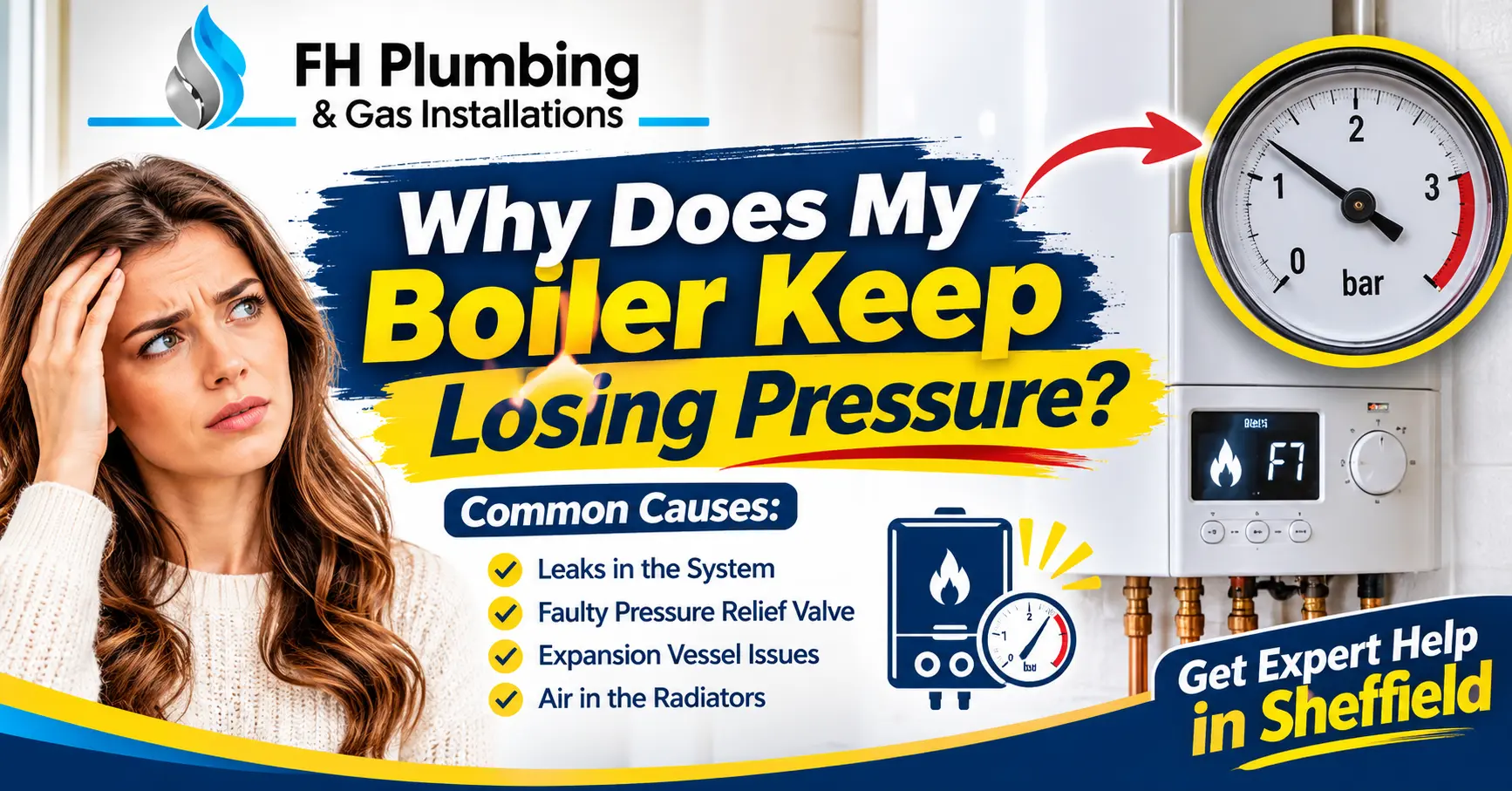
You top up the pressure, the heating works for a few days, and then the gauge drops again. If your boiler keeps losing pressure, it is telling you that water is escaping from the system or that a part is no longer doing its job. Topping it up treats the symptom, but it does not fix the cause.

This guide explains what normal boiler pressure looks like, the most common reasons it falls, how to repressurise a boiler safely, and when the problem needs an engineer. It has been written by FH Plumbing & Gas Installations, a Gas Safe registered plumbing and heating business based in Woodhouse, Sheffield, to help homeowners and landlords understand the problem before they book a repair.

Quick Answer: Why Does a Boiler Keep Losing Pressure?

A boiler keeps losing pressure for one of five main reasons: a water leak in the pipework or radiators, a faulty pressure relief valve, an expansion vessel that has lost its air charge, air released after bleeding radiators, or an internal leak inside the boiler. Small topping-up is normal after bleeding, but a pressure drop that keeps returning usually needs a professional diagnosis.

What Is Normal Boiler Pressure?

Most sealed heating systems, including combi and system boilers, should read between 1 and 1.5 bar when the heating is off. When the heating is running, the pressure naturally rises a little, often to around 2 bar, because water expands as it warms.

Gauge reading What it usually means What to do
Below 1 bar Pressure is too low Repressurise, then watch the gauge
1 to 1.5 bar (cold) Normal No action needed
Around 2 bar (hot) Normal while heating No action needed
2.5 to 3 bar or above Pressure is too high Call an engineer

Low boiler pressure problems often show up as radiators that will not heat, no hot water, or a fault code on the display. Many boilers lock out below about 0.5 bar to protect themselves.

Common Causes of a Boiler That Keeps Losing Pressure

1. A Water Leak in the System

A leak is the most common reason a boiler pressure keeps dropping. Water can escape from radiator valves, pipe joints, the towel rail or the boiler itself. Some leaks are obvious, while others are tiny drips that evaporate before you notice them.

Look for:

  • Damp patches or staining on ceilings and walls
  • Rust or white limescale marks around radiator valves
  • Drips under the boiler casing
  • Warm or discoloured patches on floors

2. A Faulty Pressure Relief Valve

The pressure relief valve releases water if the pressure climbs too high. Over time, debris can stop it closing fully, so it lets water out even at normal pressure. Boiler pressure relief valve problems are often easy to spot: check the small copper pipe that runs from the boiler to the outside wall. If it is dripping or leaves a wet patch below, the valve may be passing water.

3. Boiler Expansion Vessel Issues

The expansion vessel absorbs the extra volume of water when the system heats up. Inside it, a cushion of air does the work. When that air charge is lost, the pressure jumps when the heating comes on and the relief valve releases water. Then, as the system cools, the pressure falls lower than before.

So if your boiler pressure drops when heating is on and off in a repeating up-and-down cycle, the expansion vessel is a likely suspect. Recharging or replacing the vessel is a job for an engineer, because it usually involves working inside the boiler casing.

4. Bleeding Radiators

Bleeding a radiator lets out trapped air, but it also releases a little water. As a result, a small drop in pressure afterwards is normal. Top the system back up once and keep an eye on it. If the pressure keeps falling after that, there is another cause.

5. An Internal Boiler Leak

Seals, the heat exchanger and internal pipework can wear or corrode with age. Water from an internal leak may not be visible because it sits inside the casing. Only a Gas Safe registered engineer should remove the casing to investigate.

Boiler Losing Pressure Overnight: What It Means

A boiler losing pressure overnight, when the heating is off, usually points to a slow leak somewhere in the system. Because nothing is running, the water loss has nothing to do with heat or the expansion vessel. In contrast, a drop that only happens while the heating runs is more likely to involve the expansion vessel or the relief valve.

Writing down the gauge reading morning and evening for a few days gives your engineer a useful clue and can speed up the diagnosis.

Combi Boiler Pressure Drops: Is It Different?

Combi boiler pressure drops follow the same rules as a system boiler, because both use a sealed heating circuit. However, combi boilers have the expansion vessel and the relief valve built inside the casing, which makes these parts harder to check yourself. If your combi boiler keeps losing pressure and needs topping up more than once every few months, it is worth booking an inspection.

How to Repressurise a Boiler Safely

Always check your boiler manual first, as the steps vary by model. In general:

  1. Turn the boiler off and let the system cool.
  2. Find the filling loop. This is usually a silver braided hose with a valve at each end under the boiler, or a built-in tap or key on some models.
  3. Open the valves slowly. You will hear water entering the system.
  4. Watch the gauge. Stop when it reaches 1 to 1.5 bar.
  5. Close both valves fully. A valve left slightly open can push the pressure too high.
  6. Turn the boiler back on and reset it if the display asks you to.

If your boiler keeps losing pressure and you need to repeat this regularly, stop topping up and arrange a repair. Adding fresh water again and again also brings in oxygen, which can speed up corrosion inside radiators.

Boiler Pressure Leak Detection: What an Engineer Checks

When a homeowner tells us their boiler keeps losing pressure, our engineers follow a set process:

  • Visual inspection of the boiler, valves, radiators and exposed pipework
  • Relief valve check to see whether water is passing to the outside pipe
  • Expansion vessel test to measure its air charge
  • Pressure test to confirm whether the system holds pressure when isolated
  • Internal inspection of seals and the heat exchanger where needed

This step-by-step approach finds the true cause of central heating system pressure loss, rather than replacing parts on guesswork.

When to Call a Professional

Contact an engineer if:

  • You need to top up more than once every few months
  • The pressure rises above 2.5 bar when the heating is on
  • Water is dripping from the outside copper pipe
  • You can see a leak but cannot find its source
  • The boiler shows a fault code or keeps locking out

At FH Plumbing & Gas Installations, our Gas Safe registered engineers diagnose the cause first and explain it in plain English. You receive a free quote before any work goes ahead, and there is no call-out fee. If water is leaking into your home, call our 24/7 emergency plumbers in Sheffield straight away.

If you ever smell gas, turn off the supply at the meter, open the windows, avoid switches and flames, and call the National Gas Emergency Service on 0800 111 999.

How to Prevent Pressure Problems

  • Book an annual service. A yearly boiler service includes checks on the pressure, expansion vessel and relief valve.
  • Check the gauge monthly. Catching a slow drop early can prevent a breakdown.
  • Fix small leaks quickly. Even a weeping valve can empty the system over time.
  • Consider the boiler’s age. If an older boiler needs repeated repairs, a boiler replacement may be the better long-term choice.

Frequently Asked Questions

Is it dangerous if my boiler keeps losing pressure?

Low pressure is not usually dangerous in itself, but it stops the boiler working properly. However, the leak causing it can damage ceilings, floors and electrics, so it should be found and fixed.

How often should I need to top up my boiler pressure?

In a healthy system, rarely. Topping up after bleeding radiators is normal. If your boiler keeps losing pressure every few weeks, there is a fault to find.

Can I fix a pressure relief valve myself?

No. The relief valve is a safety device connected to the boiler, so it should only be repaired or replaced by a Gas Safe registered engineer.

Why does my boiler pressure rise and then fall?

This pattern usually means the expansion vessel has lost its air charge. The pressure climbs when the water heats, the relief valve releases the excess, and the pressure then drops when the system cools.

Will a boiler service stop pressure loss?

A service can catch early problems, such as a weak expansion vessel. However, an active leak needs a repair rather than a service.

Conclusion

When a boiler keeps losing pressure, it is a clear sign that something in the system needs attention. Repressurising will restore the heating for now, but the drop will return until the leak, valve or expansion vessel is fixed.

Keep a note of how quickly the pressure falls, check the outside copper pipe, and look for damp patches. Then, if the problem continues, contact FH Plumbing & Gas Installations on 07853 958388. A quick diagnosis now can prevent water damage and a bigger repair bill later, especially if your boiler keeps losing pressure through the colder months.

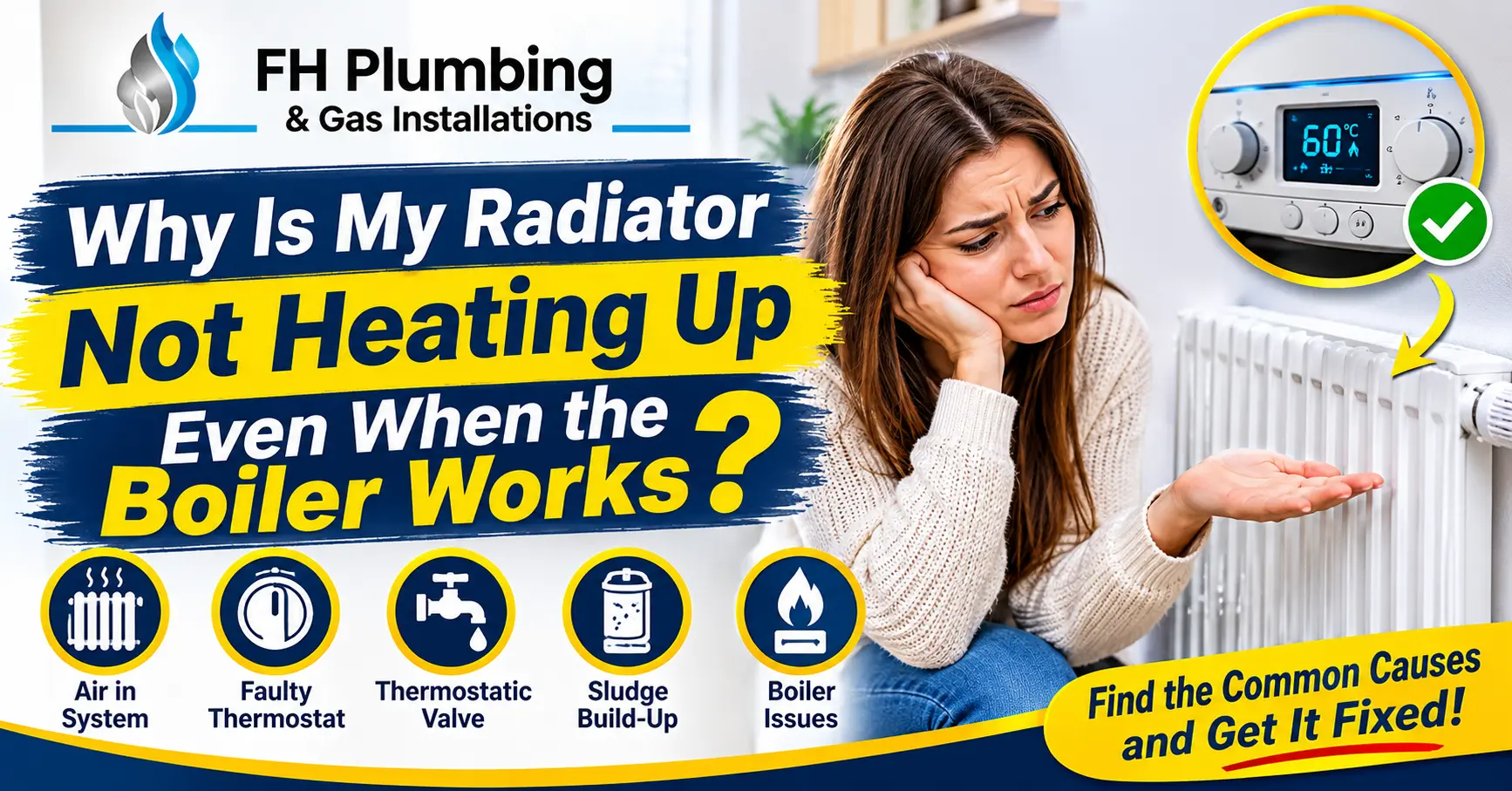
Why Is My Radiator Not Heating Up Even When the Boiler Works?

A warm boiler and a cold room make a frustrating combination. If you have a radiator not heating up while the boiler is firing normally, the boiler itself is often not the problem. In most homes, the fault sits somewhere between the boiler and that radiator, such as trapped air, sludge, a stuck valve or poor water circulation.

This guide explains what each symptom usually means, what you can safely check yourself, and when a qualified engineer should take over. It has been prepared by FH Plumbing & Gas Installations, a Gas Safe registered plumbing and heating business based in Woodhouse, Sheffield, for homeowners, tenants and landlords who want clear answers before booking a repair.

Quick Answer: Why Is a Radiator Cold When the Boiler Is On?

A radiator not heating up when the boiler works is usually caused by trapped air, a sludge build-up, a closed or stuck valve, an unbalanced system or a failing pump. Where the cold patch sits gives the best clue. A radiator cold at the top usually points to air, while a radiator cold at the bottom usually points to sludge.

What the Cold Spot Is Telling You

What you notice Likely cause First step
Hot at the bottom, cold at the top Trapped air Bleed the radiator
Hot at the top, cold at the bottom Sludge Ask an engineer to check the system
One radiator cold, the rest hot Closed or stuck valve Check both radiator valves
Radiators far from the boiler are cooler Unbalanced system Have the system balanced
Every radiator cold, boiler running Pump or valve fault Call an engineer

Common Causes of Radiator Heating Problems

Once you know where the cold patch sits, finding the reason for a radiator not heating up becomes much easier. Most radiator heating issues come down to one of six faults. Some take minutes to fix, while others need a proper diagnosis.

Trapped Air

Air rises, so it collects at the top of the radiator and stops hot water filling the panel. This is one of the most common reasons for a radiator not warming up, especially when the heating comes back on after summer. You may also hear gurgling from the pipes or the radiator itself.

Sludge Build-Up

Over time, rust and debris mix with the heating water to form a dark sludge. It settles along the bottom of the panel and blocks the flow, which is why the lower half stays cool. Several cold radiators across the house can suggest that sludge has spread through the system. Depending on how severe it is, an engineer may recommend a chemical clean, a power flush or a magnetic filter.

Closed or Stuck Valves

Each radiator normally has two valves: a thermostatic radiator valve (TRV) or manual valve on one side, and a lockshield valve on the other. If either one is closed, hot water cannot pass through. A TRV pin can also stick after months without use, which leaves one radiator not getting hot while the rest of the house stays warm.

An Unbalanced System

Hot water takes the easiest route. As a result, radiators closest to the boiler can take more than their share, while those furthest away stay lukewarm. This uneven radiator heating often shows up at the far end of the house. Balancing the system means adjusting the lockshield valves so that each radiator receives the right flow.

Low Boiler Pressure

Most sealed heating systems should read between 1 and 1.5 bar when the heating is off. Low pressure can stop water circulating properly, and many boilers will shut down to protect themselves. If the pressure keeps falling, there may be a leak or a failing component that needs attention.

Pump or Valve Faults

When every radiator stays cold while the boiler fires, the cause may be a failing pump, a stuck diverter valve or a faulty motorised valve. A central heating radiator not working in every room is rarely a simple fix, so this is a job for an engineer.

How to Fix a Radiator Not Heating Up: Safe Checks to Try First

Work through these steps in order. Turn the heating off and let the system cool before you touch or bleed a radiator.

  1. Check the controls. Make sure the thermostat is set above room temperature and the timer is calling for heat.
  2. Check the valves. Turn the TRV to its highest setting, then check that nobody has closed the lockshield valve.
  3. Find the cold spot. With the heating running, carefully feel the radiator to see whether the top, the bottom or the whole panel is cold.
  4. Bleed the radiator. With the heating off, hold a cloth under the bleed valve, open it slowly with a radiator key, and close it as soon as water appears.
  5. Check the pressure. Bleeding releases a little water, so look at the boiler gauge. If it is below 1 bar, follow your boiler manual to top it up.
  6. Test it again. Turn the heating back on and check the radiator once the system has warmed up.

These checks cover the simple faults. If you still have a radiator not heating up after bleeding it, stop there. Do not remove the radiator, force a stuck valve or open the boiler casing.

When to Call a Professional

Bring in an engineer if any of the following apply:

  • More than one radiator stays cold after bleeding
  • The same radiator needs bleeding every few weeks
  • The boiler pressure keeps dropping
  • Water is leaking around a valve or pipe
  • The boiler shows a fault code or makes unusual noises
  • Every radiator is cold while the boiler runs

Any work on the boiler itself must be carried out by a Gas Safe registered engineer. If the fault points to the boiler, our boiler repairs in Sheffield page explains how we can help. For a leak or a complete loss of heating, you can reach our emergency plumbers in Sheffield at any hour.

At FH Plumbing & Gas Installations, our engineers diagnose the cause first and explain it in plain English. You receive a free quote before any work goes ahead, and there is no call-out fee.

If you ever smell gas, leave the radiators alone. Turn off the gas at the meter, open the windows, avoid switches and flames, and call the National Gas Emergency Service on 0800 111 999.

How to Prevent Radiator Problems

A little regular care can stop most faults from returning:

  • Book an annual service. A yearly boiler service helps catch pressure and component problems early.
  • Test the heating in early autumn. You will then find a radiator not heating up before the cold weather arrives.
  • Move your TRVs in summer. Opening and closing them occasionally can help stop the pins sticking.
  • Watch the pressure gauge. A small, repeated drop is an early warning sign.
  • Ask about a magnetic filter. It captures debris before it can settle in your radiators.

Landlords should act quickly when a tenant reports a radiator not heating up. The repair visit can often be planned alongside the annual landlord gas safety check.

Frequently Asked Questions

Why is my radiator not heating up when the others are hot?

When only one radiator is cold, the cause is usually local. Trapped air, a closed valve, a stuck TRV pin or sludge inside that radiator are the most likely reasons. Start by checking both valves, then bleed it.

Why is my radiator cold at the bottom but hot at the top?

This usually means sludge has settled along the bottom of the panel. Bleeding will not clear it, so ask an engineer to inspect the system.

Why is my radiator cold at the top but hot at the bottom?

This usually means air is trapped inside. Bleeding the radiator normally solves it. If the problem returns quickly, have the system checked.

Can I bleed a radiator myself?

Yes. Most homeowners can do this safely with a radiator key, as long as the heating is off and the system has cooled. Remember to check the boiler pressure afterwards.

Will a boiler service fix cold radiators?

Not always. A service focuses on the boiler, so it may not clear sludge or balance the system. However, the engineer can often advise on what is causing the problem.

Conclusion: Get Your Heating Working Evenly Again

A radiator not heating up is rarely a sign that you need a new boiler. In many cases, the position of the cold spot points straight to the cause, and simple checks such as bleeding the radiator or opening a valve can restore the heat.

If the problem returns or more than one room is affected, it is best to have the whole system looked at. To arrange a visit, contact FH Plumbing & Gas Installations or call 07853 958388. Finding the cause early can help you avoid a bigger repair and keep every room warm through the winter.

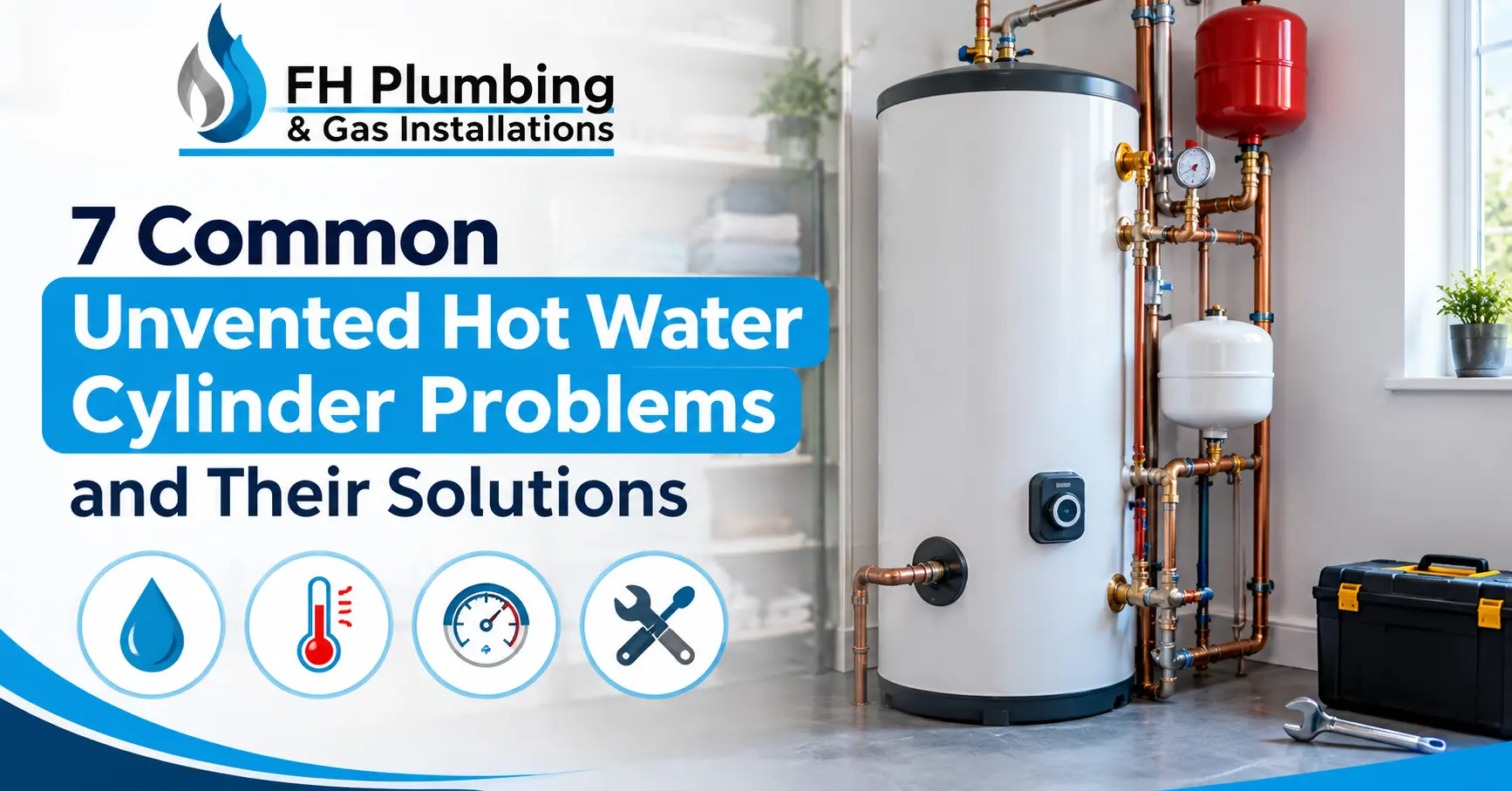
7 Common Unvented Cylinder Problems and Their Solutions

A pressurised hot water cylinder should deliver strong, steady hot water to every tap and shower in the house. When it stops doing that, you notice straight away. Most unvented cylinder problems come down to a handful of causes: no heat, falling pressure, a dripping discharge pipe, overheating, limescale, noise or weak flow at the taps.

This guide explains each fault in plain English, what is safe for you to check, and when to stop and call a qualified engineer. It is written for Sheffield homeowners, landlords and tenants who want clear answers rather than guesswork.

Quick answer: The most common faults are a failed immersion heater or thermostat, a worn expansion vessel, a faulty pressure relief valve, a blocked inlet strainer and limescale build-up. Heating and pressure faults are often fixable with a repair. Anything involving overheating, a hot or running discharge pipe, or the safety valves needs a professional straight away.

Why Safety Comes First With Pressurised Cylinders

An unvented cylinder stores hot water at mains pressure. That is why the shower is so good, and it is also why the safety devices matter. The cylinder is fitted with a temperature relief valve, an expansion relief valve and a tundish (the small visible funnel on the discharge pipe). These exist to release water safely if something goes wrong.

In England, installing and servicing these systems is controlled work under Part G3 of the Building Regulations, so it must be carried out by a suitably qualified person. Never block, cap, adjust or remove a safety valve or discharge pipe, however annoying the dripping may be. Manufacturers also recommend an annual service, and skipping it is the quickest way to turn a small fault into an expensive one.

Unvented Hot Water Cylinder Problems Sheffield Homeowners See Most

Sheffield sits in a hard water area, which means limescale is a regular feature of local cylinder faults. Alongside that, older cylinders that have never been serviced tend to show the same patterns. Here are the seven faults we would expect to come up most often, with the likely cause and the sensible next step for each.

1. Unvented Cylinder Not Heating Water

If the taps run cold or only lukewarm, start with the simple checks. Make sure the programmer or timer is calling for hot water, the cylinder thermostat is turned up, and the immersion heater switch (if you have one) is on. Check that your boiler is working, as the cylinder relies on it to heat the coil.

If those are fine, the usual culprits are:

  • A failed immersion heater element, which is common on older or limescaled cylinders
  • A faulty cylinder thermostat or energy cut-out, which stops the heating from switching on
  • A stuck motorised valve, so hot water from the boiler never reaches the coil
  • A tripped safety cut-out, which usually has a cause worth investigating

A tripped cut-out has a reset button on some models, but if it trips again after one reset, leave it alone and book an engineer. Replacing a thermostat or element is a routine repair for a competent engineer, usually completed in a single visit.

2. Unvented Cylinder Losing Pressure

If the taps are weaker than usual, or the pressure seems to come and go, the problem may lie with the cylinder rather than your supply. An unvented cylinder losing pressure often points to one of three things: a failing pressure reducing valve, a leaking joint or component, or a mains supply issue.

Check whether other cold taps in the house are also weak. If they are, the issue may be your incoming mains, and a call to your water company is a sensible first step. If only the hot water is affected, a damp patch around the cylinder, a drip from a valve or a falling reading on the pressure gauge (if fitted) suggests a fault on the cylinder side. A leak on a pressurised system should never be left to continue, so isolate the supply if you can do so safely and call an engineer.

3. Water Dripping From the Tundish

The tundish is where the cylinder shows you that something is releasing water. Occasional tiny drips can occur, but a steady drip or a heavy flow is not normal.

The most common cause is an expansion vessel that has lost its air charge. As the water heats and expands, it has nowhere to go, so the expansion relief valve opens and sends it down the discharge pipe. A worn pressure relief valve that no longer seats properly can cause the same symptom. Recharging or replacing the vessel, or replacing the valve, solves it in most cases. If the discharge pipe is running hot water, treat it as urgent and switch off the heat source (immersion switch and boiler’s hot water function) while you wait for help.

4. Water Too Hot or the Cylinder Overheating

Very hot water at the taps, steam from the discharge pipe or a cylinder that feels hotter than usual should never be ignored. A stuck thermostat or a failed cut-out can allow the water to keep heating past its set temperature, and a pressurised cylinder at excessive temperature is a genuine safety risk.

Switch off the immersion heater and the boiler’s hot water supply, keep people away from the tundish, and call a qualified engineer immediately. If there is a danger to anyone in the home, call the emergency services first. This is one fault where there is no safe DIY option, and if it happens out of hours, an emergency plumber in Sheffield is the right call.

5. Lukewarm Water or Hot Water Running Out Quickly

When a cylinder that used to last the whole family’s morning showers runs out in minutes, the cause is usually limescale. Scale coats the immersion element and coil, so heat transfers poorly and the cylinder heats more slowly while using more energy. In a hard water area this builds up faster than most people expect.

A failing thermostat can also stop the cylinder reaching full temperature, and a household that has grown or changed its habits may simply have outgrown the cylinder size. An engineer can descale or replace the element, test the thermostats and tell you honestly whether it is the cylinder or the demand that has changed.

6. Banging, Rumbling or Kettling Noises

Kettling, a rumbling sound like a kettle coming to the boil, usually means scale has built up on the heating surface and water is overheating in pockets. A sharp bang when a tap is turned off is a different issue called water hammer, caused by a sudden stop in flow.

Both are worth acting on. Scale reduces efficiency and shortens the life of the element, while repeated hammering can stress joints and fittings. Descaling, replacing worn parts or fitting a suitable arrestor are the usual fixes.

7. Weak Flow at Hot Taps

If the cold taps run well but the hot side trickles, a blocked inlet strainer or a clogged filter on the cylinder’s pressure reducing valve is a likely reason. Debris from the mains, particularly after nearby water works, collects in the strainer and restricts flow.

Cleaning the strainer is a quick job for an engineer and often restores full flow immediately. It is also a good reason to have the cylinder serviced regularly, since the strainer is checked as part of a proper service.

What Are Unvented Hot Water Cylinder Faults Telling You?

Most unvented hot water cylinder faults give warning signs before they become serious. A slightly longer wait for hot water, a damp patch, a small change in noise or a tundish that drips more than it used to are all early messages. Catching unvented cylinder problems early usually means a smaller repair and a lower bill.

Here is a simple way to decide what to do:

  • Safe to check yourself: timer settings, thermostat dial, immersion switch, whether other taps are affected
  • Call an engineer soon: weaker hot water only, slow heating, new noises, a damp patch
  • Call straight away: a hot or running discharge pipe, steam, overheating or any leak you cannot isolate

When to Call a Professional for Cylinder Repairs

Because pressurised cylinders are regulated and potentially dangerous, repairs are not a place for experiments. A qualified engineer will test the thermostats, check the expansion vessel charge, inspect the safety valves and tundish, clean the strainer and confirm the discharge pipe is installed correctly.

If you need Unvented Cylinder Repair Sheffield residents can rely on, FH Plumbing & Gas Installations can inspect the cylinder, explain what has failed and talk you through the repair or replacement options before any work starts. You can arrange a cylinder inspection at a time that suits you.

Should You Repair or Replace Your Cylinder?

Repair usually makes sense when the cylinder is in sound condition and the fault is a single component, such as a thermostat, element, valve or expansion vessel. Replacement becomes worth considering when the cylinder is leaking from the body, is heavily scaled or corroded, or keeps developing new faults. A new cylinder is often installed alongside other work, and if you are also thinking about a new boiler, boiler installation planned at the same time can save disruption. If the boiler itself is the weak link, a boiler repair may restore the whole system. FH Plumbing & Gas Installations can assess both the cylinder and the boiler and advise which option is better value for your home.

How to Prevent Problems With Your Cylinder

A few habits make a real difference when it comes to avoiding unvented cylinder problems:

  • Book an annual service so valves, vessel charge and thermostats are tested
  • Keep the area around the cylinder clear so leaks and drips are noticed quickly
  • Never cover or alter the tundish or discharge pipe
  • Act on small changes, such as noise or slower heating, rather than waiting for a breakdown
  • Keep the installation paperwork and service records somewhere safe

Frequently Asked Questions

What are the most common unvented cylinder problems?

The most common faults are a failed immersion heater or thermostat, a worn expansion vessel, a faulty pressure relief valve, a blocked inlet strainer and limescale build-up. Between them, these account for most no-heat, low-pressure and dripping complaints.

Why is my unvented cylinder not heating water?

Check the programmer, thermostat setting and immersion switch first. If they are correct, the likely causes are a failed element, a faulty thermostat, a stuck motorised valve or a tripped cut-out. An engineer can test each and repair the fault.

Why is my unvented cylinder losing pressure?

It could be a worn pressure reducing valve, a leak on the cylinder side, or a problem with the incoming mains. If only the hot taps are weak, the cylinder is the more likely cause. If every tap is weak, contact your water company.

Is it normal for the tundish to drip?

A small, occasional drip can happen, but a steady drip or a flow of water is not normal. It usually points to an expansion vessel that has lost its charge or a worn relief valve, and it should be checked.

Can I fix an unvented cylinder myself?

Simple checks such as timers and thermostat settings are fine. Work on the safety valves, expansion vessel, thermostats or discharge pipe must be done by a qualified person because the cylinder holds hot water under pressure.

How often should an unvented cylinder be serviced?

Manufacturers generally recommend an annual service. This keeps the safety devices working, reduces limescale-related faults and helps you spot wear before it causes a breakdown.

Conclusion

Most of these faults are fixable, and most give you a warning first. A cylinder that heats slowly, drips from the tundish, makes new noises or loses pressure is asking for attention, and acting early keeps repairs simple. The one rule to remember is that anything involving overheating, steam or a hot discharge pipe is a stop-and-call situation.

If you recognise any of the unvented cylinder problems described above, FH Plumbing & Gas Installations can diagnose the fault, explain your options clearly and get your hot water back to normal. Get in touch today to book an inspection, whether you need a repair, a service or advice on whether it is time for a new cylinder.

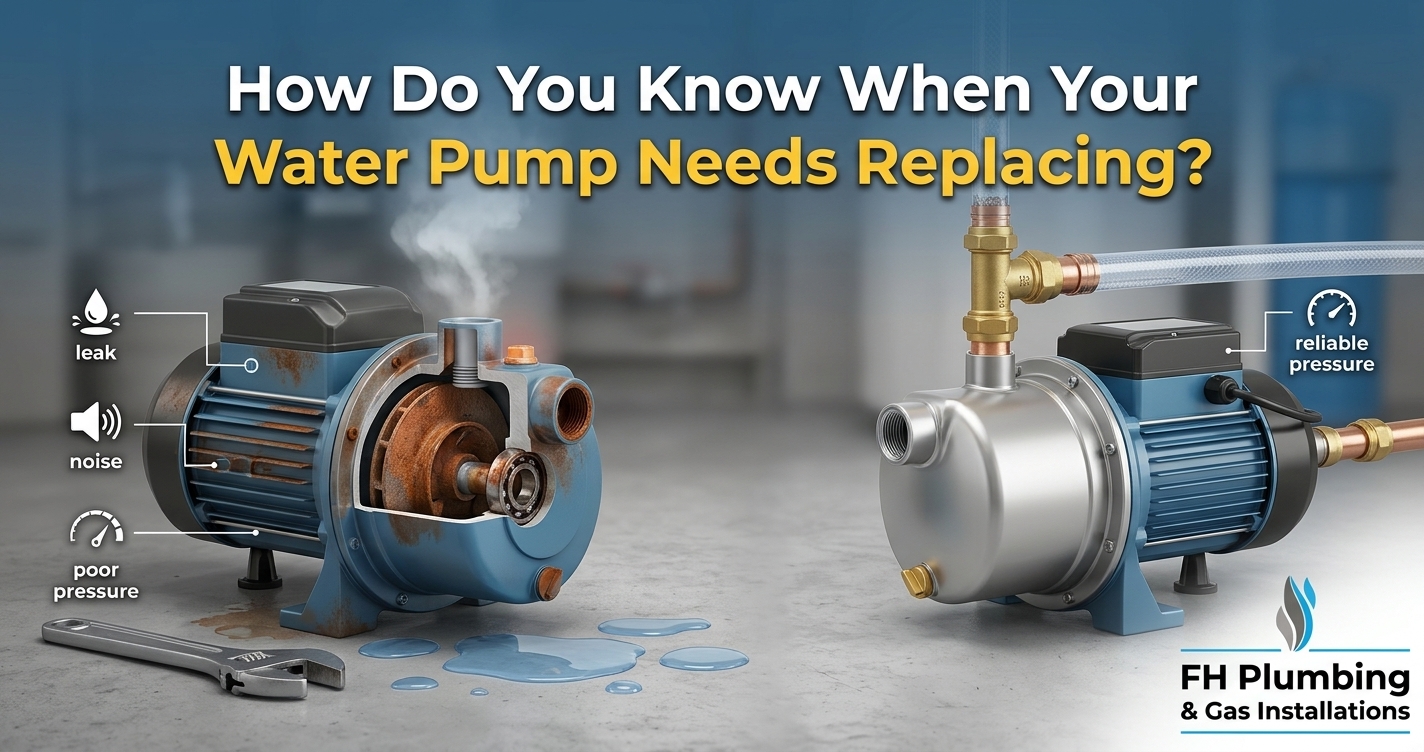
How Do You Know When Your Water Pump Needs Replacing?

A weak shower, a pump that never seems to switch off, or an odd grinding noise from the airing cupboard can all point to the same problem: a water pump that is reaching the end of its life. If you are searching for Water Pump Replacement Sheffield, this guide explains the warning signs, the likely causes and what to expect from a professional visit. It has been put together by the team at FH Plumbing & Gas Installations, a Gas Safe registered business that works on Sheffield homes every week.

Quick answer: You can usually tell your water pump needs replacing when pressure drops, the pump runs non-stop or switches on and off rapidly, it makes grinding or whining sounds, it leaks, or your energy bills rise without explanation. If the pump is old and keeps developing faults, replacement is normally better value than another repair.

What Does a Domestic Water Pump Do?

A domestic water pump boosts the pressure and flow of your water supply so that showers, taps and appliances work properly. In many Sheffield properties, particularly homes on higher ground or houses with tank-fed systems, the pump is what separates a gentle trickle from a strong, steady flow.

Because the pump works every time you use water, it wears over time. Knowing the signs of failure helps you act before a small fault turns into a cold shower or a flooded cupboard.

7 Warning Signs Your Water Pump Needs Replacing

1. Falling or Inconsistent Water Pressure

If your shower runs hot, then cool, then weak, the pump may no longer be delivering a consistent flow. Pressure that fades gradually over several weeks is a typical sign of internal wear, such as a worn impeller or a clogged inlet. If cleaning the filters and bleeding trapped air makes no difference, the lasting fix is usually water pressure pump replacement Sheffield specialists can complete in a single visit.

2. The Pump Runs Constantly or Switches On and Off Rapidly

A healthy pump starts when water is demanded and stops once the demand ends. A unit that never stops may be struggling to build pressure because of an internal fault or a leak elsewhere in the system. Rapid cycling, often called short cycling, can point to a failing pressure switch or a damaged pressure vessel. Both put extra strain on the motor and shorten its life.

3. Grinding, Whining or Rattling Noises

A pump should hum quietly in the background. Grinding often suggests worn bearings, while a high-pitched whine can mean the motor is overworking. Rattling may indicate debris or a loose impeller. Persistent noise rarely clears up on its own.

4. Leaks, Rust and Corrosion

Damp patches, drips around the seals or visible rust on the casing all mean the housing or seals are deteriorating. Even a slow drip can damage cupboards, ceilings and nearby electrics, so it should never be ignored.

5. The Pump Fails to Start or Cuts Out Intermittently

If the pump works one day and stays silent the next, the motor windings, capacitor or control board could be failing. Resetting the unit once is reasonable, but repeated cut-outs usually signal a pump nearing retirement.

6. Air, Sputtering or Discoloured Water

Sputtering taps suggest air is entering the system or the pump is losing its prime. Brown or cloudy water may point to corrosion inside the pump or pipework. Neither is something you should simply live with.

7. Rising Energy Bills

A worn pump has to work harder to move the same amount of water, which draws more electricity. If your bills have crept up and nothing else in the house has changed, an inefficient pump could be one reason.

Repair or Replace? How to Decide

Not every fault means a brand-new pump. Water pump repair Sheffield technicians carry out is often sensible when the problem is a simple part, such as a pressure switch, a seal or a blocked filter, and the unit is relatively young.

Replacement usually makes more sense when:

  • the pump is more than ten years old
  • you have already paid for repeated repairs
  • the motor or housing is corroded or damaged
  • the repair cost is close to half the price of a new unit
  • replacement parts are no longer available

In these situations, Water Pump Replacement Sheffield is generally the more economical choice, because a new unit brings a fresh warranty, quieter running and better efficiency. A trustworthy engineer will explain both options honestly and let you decide.

What Causes a Water Pump to Fail?

Understanding the cause helps prevent a repeat problem. The most common culprits include:

  • Age and general wear: bearings, seals and impellers all wear with use.
  • Limescale and sediment: deposits restrict flow and strain the motor.
  • Running dry: a pump without water can overheat within minutes.
  • Electrical faults: power surges or damaged wiring can burn out the motor.
  • Incorrect sizing or poor installation: a pump that is too small or badly fitted wears out far faster.

An annual check by a qualified engineer can spot early problems and extend the life of your pump.

What Happens During Water Pump Installation in Sheffield?

A professional water pump installation Sheffield customers can trust follows a clear process, so there are no surprises on the day:

  1. Assessment: the engineer tests pressure and flow, checks the existing pipework and confirms the right pump size for your property.
  2. Isolation: the water and power supplies to the old pump are safely turned off and the system is drained where needed.
  3. Removal: the faulty pump is disconnected and taken away.
  4. Fitting: the new pump is mounted with the correct valves, anti-vibration fixings and pipework.
  5. Electrical connection: the pump is wired in line with current regulations.
  6. Testing: the system is flushed, primed and checked for leaks, noise and consistent pressure.
  7. Handover: you receive clear advice on how to use and maintain the new pump.

When a Failing Pump Becomes an Emergency

Some faults cannot wait. Call for help straight away if you have no water at all, a pump leaking heavily near electrics, a burning smell from the motor, or a tripped fuse every time the pump starts. If it is safe to do so, switch off the pump at its isolator and close the stopcock to limit damage.

Quick emergency water pump repairs Sheffield residents can book will prevent water damage and restore your supply, and if the motor has burnt out, same-day Water Pump Replacement Sheffield may be the only safe solution. For urgent faults, contact emergency plumbers in Sheffield who can attend day or night.

Why Sheffield Homeowners Choose FH Plumbing & Gas Installations

When a pump fails, you want honest advice, clear pricing and tidy workmanship. The team is local and Gas Safe registered, diagnoses the fault first and recommends replacement only when it genuinely makes sense. Whether you need a straightforward domestic water pump replacement Sheffield property owners can rely on, or a full system check, the engineers explain every step in plain English.

If your pump is part of a wider plumbing problem, the team also works as trusted local plumbers in Sheffield, so one visit can often cover everything.

Frequently Asked Questions

How long does a water pump last?

Most domestic pumps last roughly 8 to 15 years, depending on the model, water quality and how often it runs. Regular servicing helps it reach the upper end of that range.

How much does a water pump replacement cost?

The price depends on the pump type, size and the complexity of your system. For an accurate figure for Water Pump Replacement Sheffield, an engineer needs to inspect the existing unit and pipework first, then provide a clear quote.

Can I replace a water pump myself?

It is not recommended. A pump involves both plumbing and electrics, and a poor installation can cause leaks, shorten the pump’s life or invalidate the warranty.

Is low pressure always caused by the pump?

No. Blocked filters, a partly closed stopcock, hidden leaks or problems with the mains supply can all reduce pressure. A proper diagnosis finds the real cause before any parts are replaced.

Conclusion

Weak pressure, constant running, strange noises, leaks and rising bills are the clearest signs that your water pump is failing. Acting early saves money, protects your home from water damage and keeps showers and taps performing as they should. When repair no longer makes sense, Water Pump Replacement Sheffield from the experienced team at FH Plumbing & Gas Installations gets your supply back to full strength quickly and safely. To arrange a pump inspection, get in touch today.

Contact Details

Phone: 07853 958388
Email: info@fhplumbing.co.uk
Address: 55 Badger Rise, Woodhouse, Sheffield

Do You Need Plumbers? Call Us at 07853 958388

Call Now
Get A Quote